
The Association of University Librarians of Nigerian Universities (AULNU) has called for urgent reforms in Nigeria’s academic library system.
The association is also urging stronger adoption of Open Access publishing, improved digital infrastructure, and strict adherence to professional standards in library leadership.
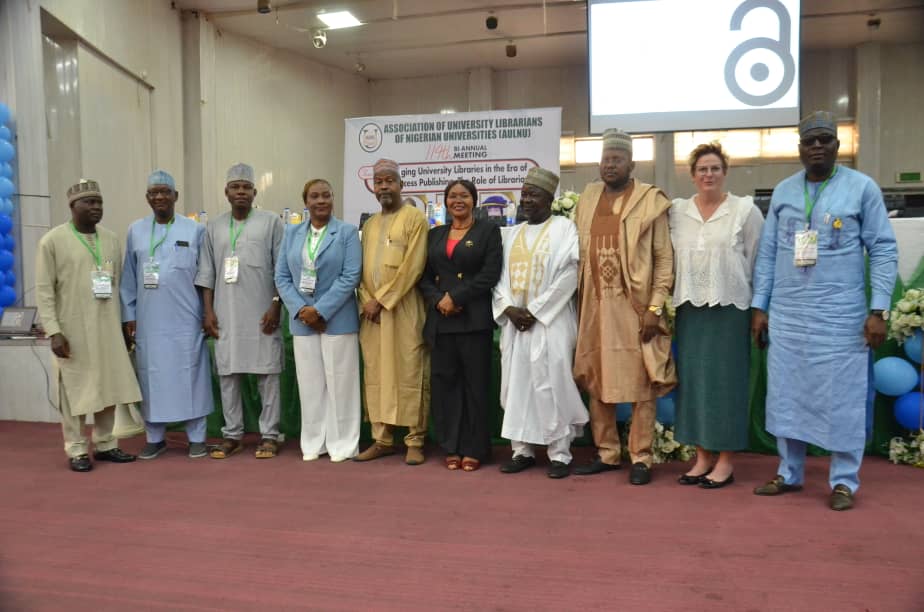
This was contained in a communiqué issued at the end of its 114th Bi-Annual Conference and General Meeting held at the National Universities Commission (NUC), Abuja.
The conference which was held from May 4 to 7, 2026, where stakeholders across the education and information management sector deliberated on the future of university libraries in a rapidly changing global knowledge environment.
The conference, themed “Managing University Libraries in the Era of Open Access Publishing: The Role of Librarians,” brought together university librarians, policymakers, scholars, and development partners to examine how Nigerian institutions can adapt to evolving trends in digital scholarship, artificial intelligence, institutional repositories, and research visibility.
According to participants, Open Access publishing has become central to modern academic communication, helping to “democratize knowledge, improve research visibility, and accelerate innovation across universities.”
The meeting also noted a shift in the role of university libraries from traditional book repositories to strategic knowledge hubs, with responsibilities including digital preservation, research dissemination, and support for scholarly communication.
However, delegates, expressed concern over persistent challenges affecting Nigerian universities, including weak ICT infrastructure, unstable electricity supply, inadequate funding, low digital literacy, and limited institutional support for Article Processing Charges (APCs).
They also warned about the growing threat of predatory journals and unethical publishing practices.
In its observations, the association highlighted the increasing relevance of platforms such as institutional repositories, Open Journal Systems (OJS), Creative Commons licensing, and national initiatives like TERAS in improving access to scholarly content.

The communiqué also stressed the need for professionalism in library leadership, insisting that only certified librarians registered with the Librarians Registration Council of Nigeria (LRCN) should head university libraries.
“The integrity and future of our academic libraries depend on professionalism and adherence to global standards,” the association stated.
It warned against the appointment of unqualified individuals into top library positions.
It further raised concerns about the misuse of artificial intelligence in academic publishing and urged institutions to adopt responsible frameworks for AI integration, research ethics, and digital scholarship.
Recommending a way forward, the association urged stronger government and institutional support for Open Access infrastructure. It called on stakeholders, including the National Library of Nigeria, the Nigerian Library Association (NLA), and TETFund, to deepen investments in digital repositories, broadband connectivity, and sustainable scholarly communication systems.
It also advised universities to introduce clear Open Access policies, strengthen research integrity frameworks, and integrate training on digital literacy, copyright awareness, Creative Commons licensing, and responsible AI use for staff and students.
“We must reposition university libraries as engines of innovation and knowledge access in a digital-first academic environment,” the communiqué stated.
AULNU further encouraged libraries across Nigeria to collaborate more closely in building shared digital infrastructure and strengthening Open Access consortia to improve research visibility and global competitiveness.
The conference concluded that university libraries remain central to teaching, research, and national development.
The association stressed the need for continuous capacity building among librarians in emerging technologies, data management, and AI-driven library systems.
Signed by Professor Angela Ebele Okpala, Chairman of AULNU, and Professor AbdulSalam Abiodun Salman, Public Relations Officer, the communiqué reaffirmed the association’s commitment to strengthening Nigeria’s higher education knowledge ecosystem in the Open Access era.
(vitalnewsngr.com)