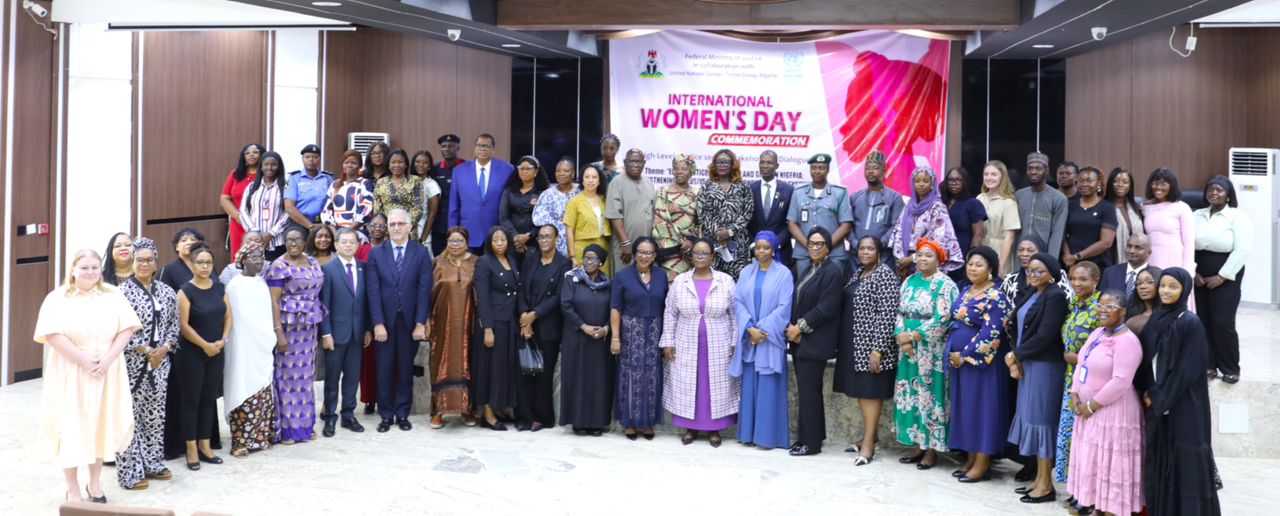

Calls for stronger legal protections and more responsive institutions for women and girls dominated discussions in Abuja on Wednesday as justice sector leaders, United Nations agencies, and civil society groups convened a high-level dialogue to mark the 2026 International Women’s Day.
The event, themed “Equal Justice for Women and Girls in Nigeria : Strengthening Inclusive Gender-Responsive Justice Systems,” was jointly organised by the Federal Ministry of Justice and the United Nations Gender Theme Group and held at the Federal Ministry of Justice.
Speaking on behalf of the UN Resident Coordinator, Mohamed Fall, the UN system emphasised that ensuring justice for women and girls remains central to building inclusive societies.
The UN called for stronger partnerships between government institutions, the judiciary, law enforcement agencies and communities to address barriers that continue to prevent survivors of violence from accessing justice.
Delivering opening remarks on behalf of the UN Resident Coordinator, the Representative of UN Women to Nigeria and the Economic Community of West African States, Beatrice Eyong, warned that the scale of gender-based violence in Nigeria remains alarming and demands urgent action.
Citing data from the 2024 Nigeria Demographic and Health Survey, she noted that 21 percent of Nigerian women aged 15 to 49 have experienced physical or sexual violence, while 58 percent of survivors never seek help or report the abuse.
“More than half of women who experience violence never seek help, not because they do not need it, but because they are not confident that the systems meant to protect them will do so,” she said.
Eyong also pointed to harmful social attitudes that continue to undermine justice for women, noting that 22 percent of women and 16 percent of men in Nigeria still believe a husband is justified in beating his wife.
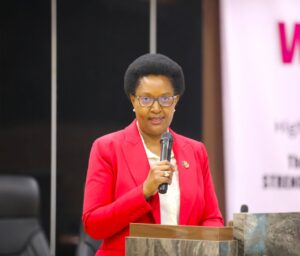
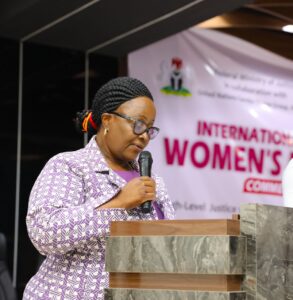
Resident Representatives of the United Nations Population Fund (UNFPA), Ms Muriel Mafico highlighted the links between gender-based violence and broader development challenges such as child marriage and harmful traditional practices, noting that nearly 38 percent of Nigerian women aged 25–49 were married before the age of 18. The agency stressed the need for stronger prevention strategies alongside effective justice mechanisms.
She says d: “Across Nigeria, countless women and girls remain silenced by fear, stigma, and the absence of adequate support when seeking justice.
“For many survivors, justice remains more an aspiration than a lived reality—not because laws do not exist, but because the system often feels out of reach.
“Nigeria has made commendable progress in establishing legal frameworks designed to protect women and girls.
“However, the real test lies in ensuring that these laws are accessible, responsive, effective, and centered on the dignity and protection of survivors.”
She added that : “Today’s fireside discussion represents an important step in confronting these gaps.
“By bringing together justice sector actors, legal professionals, civil society organisations, and human rights institutions, we have an opportunity to move beyond commitments and toward concrete, measurable action.
“At the United Nations Population Fund (UNFPA), we believe that access to justice is fundamentally a human rights imperative. It is about restoring dignity, strengthening protection mechanisms, and ensuring that no woman or girl is left to navigate injustice alone.
“As we align this dialogue with the global momentum of the Commission on the Status of Women, our shared goal is clear : to transform justice systems into inclusive and accountable institutions that respond effectively to the needs of those most often left behind.”
Mafico also said : “Over the years, UNFPA has partnered closely with the Federal Ministry of Women Affairs and the Federal Ministry of Justice to strengthen access to justice for survivors of gender-based violence.
“For example, UNFPA has supported capacity-building initiatives for judges, lawyers, and law enforcement agencies on gender-based violence response and survivor-centred care, particularly in emergency and humanitarian settings.”
She noted that UNFPA has also supported improvements in the functionality of the Adamawa State forensic laboratory, strengthening the generation of medico-legal evidence and enabling more effective prosecution of gender-based violence cases.
She added that UNFPA is working with state governments to strengthen justice sector responsiveness, including commitments to deploy legal personnel to One-Stop Centres that provide integrated support services for survivors.
She said : “We have also partnered with tertiary institutions in Lagos State, which led to the approval and launch of the Sexual Exploitation, Abuse and Harassment (SEAH) Policy for tertiary institutions—an important step toward reinforcing a zero-tolerance stance and safeguarding students, staff, and visitors.”
From the government’s side, the Head of the Sexual and Gender-Based Violence Unit of the Federal Ministry of Justice, Yewande Gbola-Awopetu, reaffirmed the ministry’s commitment to improving access to justice for survivors and strengthening prosecution of offenders.
She noted that while Nigeria has developed legal frameworks to address violence against women and girls, including the Violence Against Persons Prohibition Act, challenges such as stigma, economic barriers and institutional gaps continue to prevent many survivors from pursuing justice.
“We must ensure that justice is not an abstract promise but a lived reality for every woman and girl in Nigeria,” she said, calling for stronger collaboration among government institutions, the judiciary, law enforcement and civil society.
In a keynote address, Justice Angela Otaluka stressed that ensuring equal justice for women and girls is both a constitutional and moral responsibility.

She noted that despite progress in law reform and institutional development, women and girls still face significant barriers to justice due to entrenched cultural norms, economic dependency, delays within the legal system and insufficient gender sensitivity among justice sector actors.
“Gender-based violence remains a grave concern because it is not only a violation of fundamental human rights but also a direct assault on the dignity, security and equality of women and girls under the law,” she said.
Justice Otaluka also commended the Chief Judge of the Federal Capital Territory High Court, Husseini Baba Yusuf, for establishing specialised courts aimed at strengthening the handling of gender-based violence cases and improving access to justice for survivors.
According to her, building a gender-responsive justice system requires deliberate institutional reforms including capacity building for judges and prosecutors, specialised courts for GBV cases, the use of technology to reduce delays, and stronger legal aid systems for vulnerable women and girls.
She further stressed the need for greater collaboration between government institutions, civil society organisations, international partners and traditional and religious leaders to close the justice gap.
Speakers also emphasised the importance of empowering women within the justice system itself, including promoting greater representation of women in leadership positions across the judiciary and the legal profession.
Participants at the dialogue included judges, senior lawyers, law enforcement officials, civil society advocates and development partners, who examined practical measures to strengthen justice delivery and eliminate impunity for gender-based violence.
The meeting concluded with a renewed call for stronger implementation of existing laws, improved survivor support systems and sustained collaboration between Nigeria and international partners to ensure that justice institutions are more inclusive, responsive and accessible to women and girls across the country.
(vitalnewsngr.com)