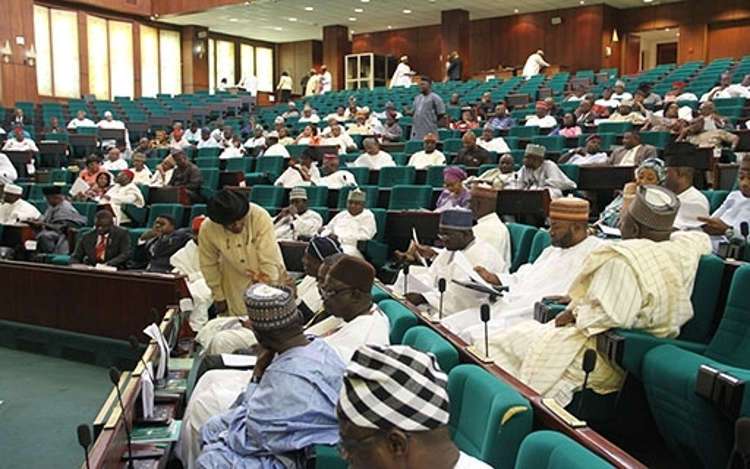

The House of Representatives has endorsed a constitutional amendment to pave the way for the creation of state police forces.
The development marks a significant development in efforts to reform Nigeria’s security system.
The legislation, known as the Constitution of the Federal Republic of Nigeria (Sixth Alteration) Bill, 2026, received overwhelming backing from lawmakers during plenary on Thursday after it was considered by the Committee of the Whole house.
The proposal was presented by the Deputy Speaker, Benjamin Kalu, who also heads the House Committee on Constitution Review.
Following intense deliberations, members voted overwhelmingly in support of the measure.
A manual vote conducted on the floor of the chamber showed that 289 lawmakers backed the bill, while one member abstained.
No vote was recorded against the proposal.
The amendment seeks to introduce a two-tier policing structure consisting of a federal police service and separate police organisations operated by state governments.
Supporters of the proposal argue that a decentralised system would improve security management and strengthen responses to criminal activities in different parts of the country.
If enacted, the amendment would revise Section 214 of the Constitution to formally recognise both federal and state policing institutions.
While the National Assembly would retain responsibility for setting operational standards, powers and administrative guidelines for the federal police, it would also establish minimum requirements that states must meet before creating their own police services.
The proposal stipulates that a state police outfit cannot begin operations unless the relevant State House of Assembly passes an enabling law and the organisation is certified as meeting nationally approved standards.
It also provides that federal police officers will continue carrying out policing duties in any state until the state’s police service is fully established and operational.
To prevent misuse of the system, the bill outlines conditions under which federal authorities may step into state policing matters.
Such intervention would only be allowed during a breakdown of public order, at the request of a state governor, or where a state police organisation is unable to function because of financial, administrative or operational difficulties.
The measure also proposes adjustments to police leadership appointments.
Under the arrangement, the Inspector-General of Police would be appointed by the President based on the recommendation of the Nigeria Police Council and subject to confirmation by the National Assembly.
At the state level, governors would appoint commissioners of police from among serving state police officers, following recommendations from the Nigeria Police Council and confirmation by the relevant State House of Assembly.
Governors would also be empowered to issue lawful directives on public safety and security matters.
However, where a commissioner believes such instructions are unlawful or conflict with established policing standards, the matter may be referred to the Nigeria Police Council for a final determination.

The amendment further seeks to update constitutional references by replacing the National Police Council and Federal Police Service Commission with the Nigeria Police Council and Police Service Commission.
Speaking during consideration of the proposal, Kalu said the reform was intended to address persistent security threats across the country by bringing policing closer to local communities.
He argued that a command structure concentrated in Abuja often slows emergency responses, adding that officers with better knowledge of local environments, languages and culture would be more effective in tackling crime.
Speaker Abbas Tajudeen, who presided over the sitting, said lawmakers chose to give priority to the security-related amendment because of its urgency and national importance.
The House relied on a manual voting process after the electronic voting system developed technical problems during proceedings.
With the House’s approval secured, the proposal will now proceed to the Senate for consideration.
If endorsed by the Upper Chamber, it must then be ratified by at least two-thirds of the 36 State Houses of Assembly before being transmitted to the President for assent.
Should it eventually become law, the amendment is expected to establish a multi-layered policing structure aimed at improving efforts to combat kidnapping, terrorism, banditry and other security challenges through greater involvement of state governments and local communities.
Source – ICIR
(vitalnewsngr.com)