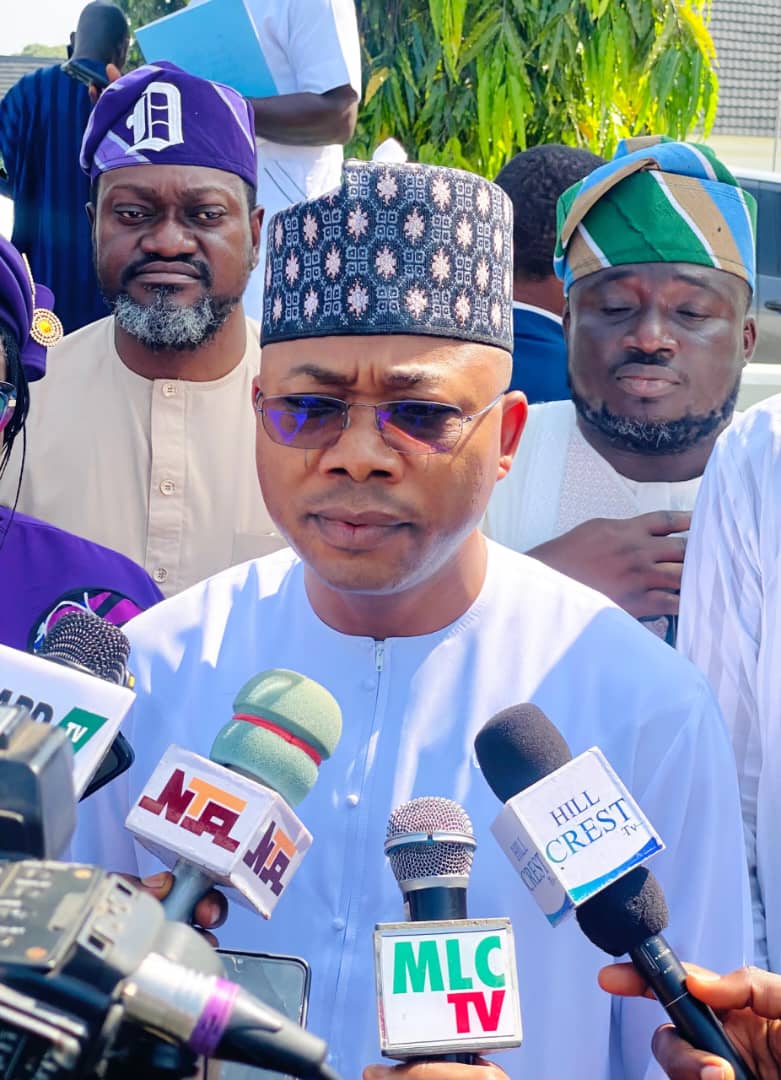

Cashew farmers under the aegis National Cashew Association of Nigeria (NCAN), at the weekend, commended the Governor Ahmed Usman Ododo of Kogi State over his administration’s cashew pricing policy.
They said the policy has led to price stability in Nigeria’s commodity market.
The association stated this just as cashew price has jumped to N1.8million per tonne.
Addressing newsmen in Lokoja, the National President of NCAN, Dr Ojo Ajanaku, said Governor Ododo deserved commendation over the positive development, describing his action as patriotic.
Ajanaku said Ododo has done well and written “his name in gold” for standing strong with cashew farmers in the State, strictly implementing the policy, and not allowing foreigners to buy cashew beyond the farm-gate price.
According to him, the Ododo-led government formulated a policy for its cashew industry called Kogi State Cashew Procurement Policy, complementing the policy which had earlier been put in place by the Federal Executive Council, which clearly stated “no farm gate encroachment by all foreigners”.
He further stated that the policy had made farmers to smile to the bank, adding that farmers are now free from price manipulations by foreigners after 10 years.
According to the NCAN boss, Kogi State is one of Nigeria’s leading cashew-producing States, and the Kogi State government is repositioning the cashew sector in the state including stopping foreigners at the farm-gate.
He said : “We have been in this field for a very long time now, like myself, I have been in this sector for over three decades.
“For the past 10 years, we have noticed that every year, especially when Nigerians want to celebrate Salah, which also is a season of cashew harvesting, foreigners who come to buy cashew ganged up against cashew farmers because they know that Nigerians need money and are desperate to sell their cashew, and are in the field harvesting their cashew, take advantage of them to control the price, and intentionally crash down the price at the detriment of farmers.

“Cashew is selling for N1.8 million per tonne by virtue of the bold policy implementation by the Governor of Kogi State, Usman Ododo, and farmers are very happy and smiling to the banks.
He said : “The price of cashew is also stable as I speak.
“It has never happened because our past experience is that these foreigners will agree and go ahead to suddenly drop the price to N500,000 or N300,000 per tonne because they know that farmers need money.”
He also said the Kogi State Government and NCAN are working together to ensure the farmers enjoy the fruit of their labour.
“Kogi State is a major cashew producing state in the country, and we told the Kogi State government that these foreigners go beyond the farm-gate to buy cashew at oppressive and offensive prices is affecting our farmers but we can get it right if only we can enforce the Federal Executive Council, FEC, policy that said no farm-gate encroachment by all foreigners.
“Kogi state worked with us, the National Cashew Association of Nigeria, NCAN, as a team and we came up with a policy, which is called Kogi State Cashew Procurement Policy that stopped foreigners from buying directly from the farmers.
“They don’t have access to the farmers and could not control the price this time around,” Ojo explained.
He further stated that : “For this reason, for the first time after 10 years, the price of cashew did not drop because they could not control it, and whatever happened in Kogi affected every other part of Nigeria.
“Why? Because Kogi is one of the major cash producing states in Nigeria, and because they could not have access to farmers, could not get what they think they can get, they were all scouting for that cashew and the price of cashew has remained stable up till now.”
According to him, the development will strengthen the Naira, because when there is a strong political support and will for farmers ,the Naira will rapidly appreciate .
“By extension, I am working to protect our currency.
“That is the major war, and foreigners under the guise of doing business with Nigeria are really warring against the power of the Naira, and I call it an international economic war.
“But one thing that bothers me is that many of our government officials don’t look at this angle,” he added.
(vitalnewsngr.com)