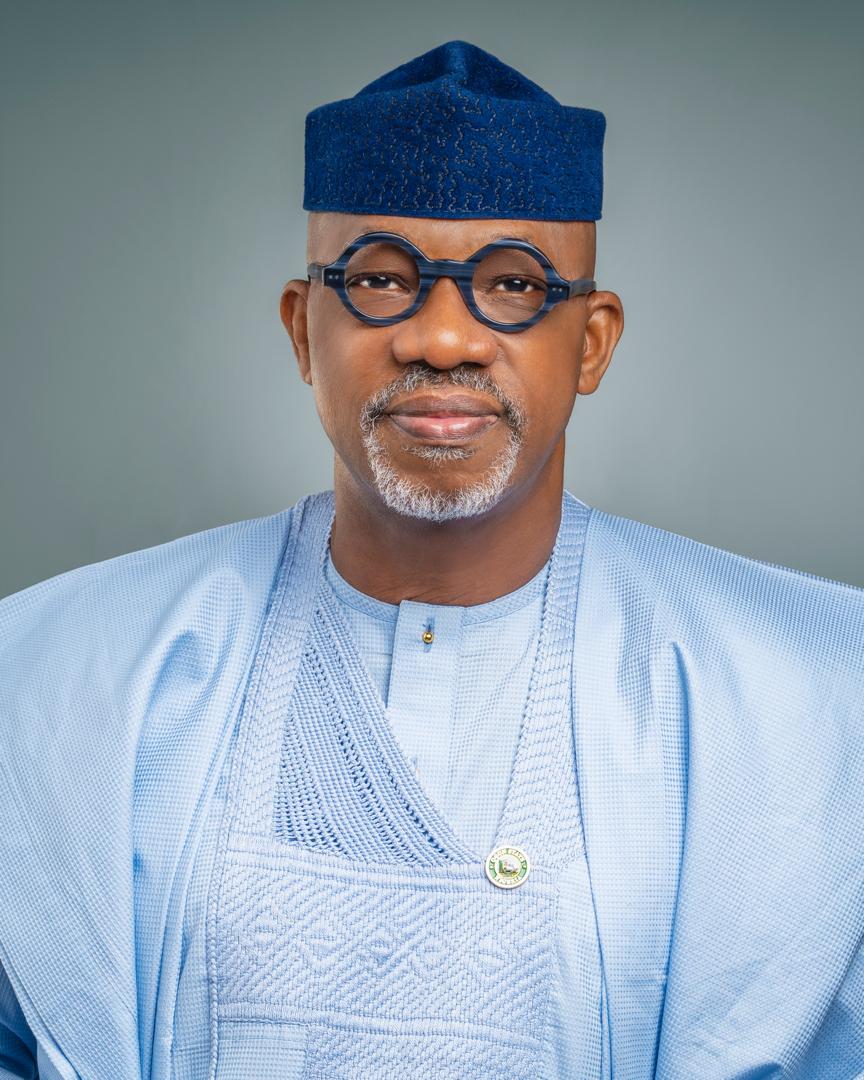

Governor Dapo Abiodun of Ogun State has expressed confidence that all the 36 State Houses of Assembly will simultaneously approve the constitutional amendment bill seeking the creation of state police, describing the initiative as a landmark step towards strengthening Nigeria’s internal security architecture.
Speaking at an Arise Television Town Hall Meeting on state policing, Governor Abiodun said the proposal had attained an unprecedented national consensus.
He commended President Bola Ahmed Tinubu for transmitting the Executive Bill to the National Assembly and applauding lawmakers and other stakeholders for advancing the legislation.
Abiodun described June 24, 2026, as a historic day in Nigeria’s democratic journey, noting that it marked the transmission of the Executive Bill on state police to the National Assembly and its swift consideration by the Senate.
According to him, previous administrations had attempted to establish state police without success, making the current progress particularly significant.
““I want to thank Arise TV for organising this very important town hall meeting on a matter that has now become a national consensus.

“One of the few subjects in Nigeria that enjoys such broad national acceptance is the creation of state police,” the governor said.
Abiodun, who chairs the Nigeria Governors’ Forum Committee on State Police Creation, said governors across the federation had played a central role in shaping the bill, reflecting the importance sub-national governments attach to the initiative.
He explained that although, governors are constitutionally regarded as the Chief Security Officers of their states, they have historically exercised limited control over policing despite bearing much of the financial responsibility for supporting police operations.
He disclosed that the Nigeria Governors’ Forum constituted a committee comprising governors and state Attorneys-General to work closely with the executive and legislative arms of government in developing the bill.
“”The bill has our input, and we are excited because what we are seeing today is the fulfilment of a dream we have nurtured for many years. It validates our long-standing advocacy for community policing,” he said.
The governor also said the proposed state police structure would build on the successes recorded by existing regional security outfits such as the South-West Security Network, codenamed Amotekun, which he noted had effectively complemented conventional policing through intelligence gathering and community engagement.
Abiodun stated that the establishment of state police would immediately improve Nigeria’s police-to-citizen ratio while creating employment opportunities across the country’s 774 local government areas.
He observed that Nigeria currently has an estimated ratio of one police officer to about 660 citizens, compared to the United Nations benchmark of one officer to 440 citizens and the global standard of one officer to 250 citizens.
Using Ogun State as an example, the governor said the state currently has about 6,000 personnel spread across Amotekun, the So-Safe Corps, vigilante groups and other security outfits, adding that similar structures across the 36 states could instantly provide between 300,000 and 400,000 additional security personnel nationwide.
He explained that the constitutional amendment seeks to transfer policing from the Exclusive Legislative List to the Concurrent Legislative List, thereby empowering states to establish their own police services.
Abiodun expressed optimism that, because of the extensive consultations and involvement of governors in the drafting process, all state legislatures would consider and pass the amendment simultaneously once it is transmitted to them.
Looking beyond the constitutional amendment, the governor stressed that significant work remained in operationalising the new policing framework.
He said consequential amendments would be required to either amend or repeal the existing Act to accommodate the new constitutional order.
According to him, the next phase would involve establishing the operational framework for state police, including defining its structure, relationship with the national police, oversight mechanisms to prevent abuse, funding arrangements, training standards, and the establishment of appropriate institutions such as police councils and police service commissions.
He maintained that these measures would ensure that state police functions effectively, professionally and in line with the objectives of enhancing security and safeguarding the rights of Nigerians.
(vitalnewsngr.com)