Vice-President Kashim Shettima on Friday commissioned the Kashim Ibrahim University Teaching Hospital alongside other key projects delivered by the Zulum administration, in a move aimed at expanding access to quality healthcare and strengthening medical training in the North-east.
The hospital, which combines specialist medical services with the training of healthcare professionals, is expected to reduce the need for patients in Borno and neighbouring communities to travel elsewhere for advanced diagnosis and treatment.
Equipped with a 1.5-tesla magnetic resonance imaging (MRI) scanner, a 160-slice computed tomography (CT) scanner, three conventional and two mobile X-ray machines, three 4D ultrasound machines, a fluoroscopy system and digital mammography equipment, the facility is designed to expand access to specialised medical services.
Its infrastructure also includes 13 specialist departments covering diagnostic, medical, surgical, emergency, paediatric, internal medicine and physiotherapy services, among others.
The project comprises a medical college complex, a students’ hostel, a 200-unit staff estate and an oxygen plant complex, providing supporting infrastructure for patient care, medical education and healthcare delivery.
Beyond reducing the burden of seeking treatment outside the state, the hospital is expected to serve residents of neighbouring communities and people across the Lake Chad region, while improving access to specialist care for underserved populations.
It is also expected to strengthen healthcare manpower development by providing training opportunities for doctors, nurses and allied health professionals, helping to address shortages that have constrained healthcare delivery in Borno and the wider North-east.
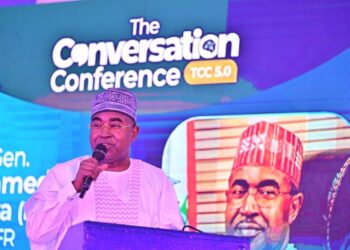
Speaking at the commissioning, Shettima commended Zulum for investing in institutions capable of delivering lasting benefits to the state, particularly in healthcare and education.
He said the value of public office should ultimately be measured by the institutions established, infrastructure delivered and lives improved, rather than the privileges associated with political positions.

“We shall be judged by what survives our time in office, the offices we held, the aides who surrounded us, and the length of our convoys will have surrendered their importance.
“What will endure are the institutions we built, the roads we built and the lives we improved through service.
“That is the meaning of our gathering here in Maiduguri. That is why this occasion brings me such joy,” the Vice-President said.

Shettima said the hospital and the schools established by the state government reflected Zulum’s commitment to rebuilding Borno through investments that directly affect people’s lives.
“According to Carl Sagan’s law of insignificance, 100 years from now, everyone you know or who knows you will be out of this world.
“This is why I do not doubt the vision of His Excellency Professor Babagana Umara Zulum; his passion for healthcare and education is expressed in the institution before us,” he said.
He added that the teaching hospital and schools being established across Maiduguri and other parts of the state demonstrated the governor’s conviction that recovery must translate into tangible improvements in healthcare and access to education.
“The ultra-modern Kashim Ibrahim University Teaching Hospital and the school that dotted our landscape in Maiduguri and across the state give substance to his belief that Borno recovery must reach the patient awaiting treatment and the child sitting in a place in the classroom,” Shettima said.
In the education sector, the Vice-President also commissioned Yerwa Practice Mega Primary School, built by the Zulum administration, and another mega primary school delivered under the Kashim Shettima Free Education Programme.
The programme, regarded as one of the Vice-President’s key education initiatives, provides free education for orphans and vulnerable children.
The projects underscore the Borno government’s strategy of linking post-conflict recovery with investments in essential public services, particularly healthcare and education.
For a state grappling with the long-term effects of insurgency, expanding access to specialist medical services and strengthening the institutions responsible for training health workers remain critical to improving living conditions and rebuilding public infrastructure.
The new teaching hospital is expected to provide a major boost to those efforts by bringing advanced diagnostic services, specialist treatment and medical training together in one institution.
(vitalnewsngr.com)