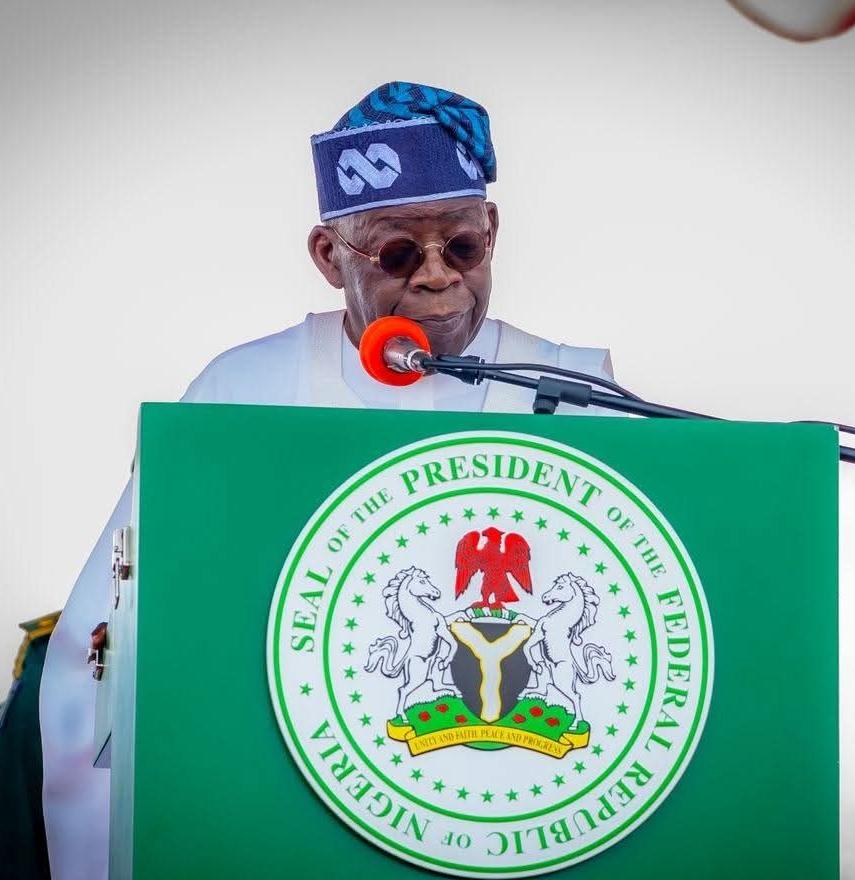

President Bola Ahmed Tinubu has approved a new fiscal framework designed to attract up to $50 billion in fresh investment into Nigeria’s deep offshore oil and gas sector and revive major projects that have remained stalled for years.
The new framework, introduced through the Deep Offshore Oil and Gas Projects Incentives (Tax Remission) Order, 2026, is expected to pave the way for the development of the approximately $10 billion Bonga South West project and other large-scale offshore investments.
The reform replaces the previous system of negotiating incentives on a project-by-project basis with a uniform, rules-based framework that sets out clear eligibility requirements and implementation procedures for qualifying developments.
The Presidency said the measure was aimed at giving international investors greater certainty while improving Nigeria’s ability to compete for capital in the highly competitive global offshore oil industry.
The approval followed a meeting between Tinubu and the Chief Executive Officer of Shell plc, Wael Sawan, during which the President directed the development of measures to unlock the next phase of Nigeria’s deep offshore investment pipeline.
Rather than limiting the intervention to a single project, the Federal Government subsequently developed a broader framework applicable to multiple qualifying deep offshore developments.
Under the new arrangement, NNPC Limited, as the Federal Government’s nominated counterparty under the Production Sharing Contracts, can proceed with amendments to eligible contracts to facilitate implementation of the incentives.
Special Adviser to the President on Oil and Gas, Olu Arowolo-Verheijen, said the framework would also be used to drive greater participation of Nigerian companies in the execution of offshore projects.
According to her, qualifying projects are expected to maximise activities carried out in Nigeria where commercially and technically feasible.
She said this would boost local engineering, fabrication, marine logistics, technical services and project management, while creating skilled employment opportunities and expanding domestic supply chains.
“The objective is not only to increase investment and production, but also to create skilled jobs, deepen local supply chains and position Nigeria as Africa’s regional hub for deep offshore project execution,” Arowolo-Verheijen said.
The framework was developed through an inter-agency process involving the Presidency, fiscal and legal authorities, petroleum-sector regulators and other government institutions, as well as operators and industry stakeholders.
Tinubu commended the Federal Ministry of Justice, Federal Ministry of Finance, Federal Ministry of Petroleum Resources, Nigeria Revenue Service, NNPC Limited, Nigerian Upstream Petroleum Regulatory Commission and Nigerian Content Development and Monitoring Board for their roles in developing the framework.
The President said the reform was intended to address one of the major factors influencing long-term investment decisions—certainty.

“The countries that attract long-term investment are not necessarily those with the greatest natural resources. They are the ones that provide the greatest certainty,” Tinubu said.
He said the policy was part of efforts to establish an investment environment based on predictable rules, strong institutions and long-term partnerships.
“We are creating the conditions for capital to flow, for Nigerian businesses to grow, for our people to prosper and for our natural resources to deliver lasting national value,” he added.
The Federal Government expects the framework to accelerate the development of Nigeria’s deep offshore assets, increase oil and gas production, attract long-term capital and strengthen the country’s position as a major destination for offshore energy investment in Africa.
Source – The Watch Newspaper
(vitalnewsngr.com)