As Nigeria intensifies efforts to build a stronger tax culture through sweeping fiscal reforms, a clear message is emerging from traders, artisans and business owners in Kwara State : citizens are willing to pay their taxes, but they want governments to be more transparent about how the money is spent.
That demand for accountability echoed across markets, streets and public spaces in Ilorin during the 2026 Annual Tax Week organised by the Ilorin and District Society of the Chartered Institute of Taxation of Nigeria (CITN), where tax professionals, government officials and revenue administrators took tax education directly to the people.
The week-long campaign, held under the theme “Tax Awareness for National Growth: Reform, Compliance and Shared Prosperity,” featured market sensitisation programmes, tax clinics and a city-wide awareness walk aimed at deepening public understanding of Nigeria’s new tax reforms while encouraging voluntary compliance.
However, beyond discussions on filing tax returns and understanding new laws, taxpayers consistently returned to one issue—confidence in government spending.
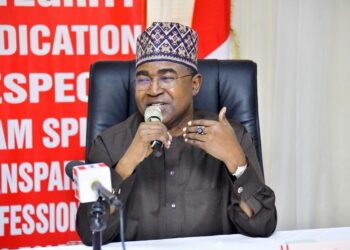
Chairman of CITN Ilorin and District Society, Mr. Taofiq Alabi, said interactions with residents across major markets, including Oja Tituntun, Mandate Market and Oja Oba, revealed widespread concern over the management of public funds generated through taxation.
“What really stands out in all the locations we visited is that the public wants more transparency from the government.
“They believe taxes are being paid, but they are not fully convinced that the proceeds are being effectively utilised,” Alabi said.
He explained that the outreach was designed not only to educate residents but also to provide practical solutions to tax-related challenges through on-the-spot advisory services.
“The reception has been very good. People came out in large numbers to present their tax-related challenges for our members to help resolve,” he said.
The exercise also exposed another major challenge confronting the country’s tax reform agenda—limited public awareness.
Although Nigeria’s comprehensive tax reforms came into effect in June 2025, Alabi observed that many traders and operators within the informal sector still know little about the changes.
“Most of the markets we visited are still not fully aware of the new tax reforms.
“This awareness programme must be continuous because many taxpayers do not yet understand the changes introduced by government,” he noted.
He assured participants that observations gathered during the campaign would be forwarded to relevant tax authorities to improve future engagement with taxpayers.
The issue of tax assessment also featured prominently during discussions with traders, many of whom complained about what they considered excessive tax demands.
According to Alabi, poor financial record-keeping is largely responsible for such disputes.
“Many traders complained about the taxes being demanded from them, but when records are not properly kept, it becomes difficult to determine the actual tax obligations.
“If they maintain proper financial records, they will better understand that tax assessments are based on income and not arbitrary charges,” he explained.
The public awareness drive culminated in a tax walk through major parts of Ilorin, drawing participation from tax practitioners, lawyers and government officials committed to promoting a stronger culture of tax compliance.
Senior Advocate of Nigeria, Prof. Yusuf Ali, described taxation as one of the most dependable tools for national development, stressing that public awareness is just as important as enforcement.
“Tax awareness is crucial for national growth. When citizens understand the importance of paying taxes and comply willingly, government will have more resources to provide critical infrastructure and social amenities,” he said.
Ali added that voluntary compliance can only thrive when taxpayers understand the value of their contributions.
“Compliance is not just about enforcement; it is about creating awareness and ensuring that people see the benefits of what they contribute.
“Taxation remains one of the most reliable tools for national development,” he added.
For revenue administrators, the reforms represent an opportunity to strengthen sustainable government financing.
Fellow of CITN and Director of Administration and Operations at the Kwara State Internal Revenue Service (KW-IRS), Lakadri Yusuf, said the reforms were the product of nearly two years of intensive work, demonstrating government’s commitment to building a stronger tax system.
“The tax reform exercise took almost two years to accomplish.
“The level of executive support and resources committed to that process shows how important taxation is.
“Every responsible government supports taxation because it is the most reliable source of funding government activities,” he said.
While acknowledging that government must account for tax revenues, Yusuf insisted that citizens also have a responsibility to fulfil their tax obligations.
“For us to grow as a state, we must imbibe the culture of compliance.
“Taxation is an obligation. The utilisation of the revenue is the responsibility of government, but every citizen has a duty to pay taxes.”
He pointed to subsidised healthcare and education as examples of services financed through taxes.
“Look at the facilities available in government hospitals and compare the cost of treatment with private hospitals.
“The same applies to public schools where quality facilities are provided at fees far lower than what is obtainable in private institutions.
“Part of what taxpayers contribute is used to subsidise these services,” Yusuf said.
Tax Controller of the Emerging Tax Office, Ilorin, of the Nigeria Revenue Service, Hajia Adama Isa, urged taxpayers to embrace digital tools introduced under the reforms, including the RE360 platform, saying they simplify tax filing and administration.
“This activity is to bring awareness to the general public on the need to pay taxes as we do.
“We are setting an example for others to follow,” she said.
She assured taxpayers that officials remain available to assist anyone encountering difficulties with tax filing.
“Anyone who does not understand how to file their accounts is free to come to us and we will guide them through the process,” Isa added.
Kwara State Auditor-General, Alhaji Alayande Fatai Olajide, described tax awareness as an important step towards correcting misconceptions surrounding the new tax laws.
“This programme is very good because it is going to change the mindset of the masses.
“It will reduce and remove confusion, especially concerning the new tax reforms introduced by the President,” he said.
He argued that Nigeria’s development depends largely on citizens embracing tax compliance.
“Look at countries that have developed; they developed based on taxes.
“In Nigeria, the level at which citizens respond to tax payment is still very low, and that is why we are not developing as expected.”
Similarly, Kwara State Deputy Accountant-General, Hajia Abdulraheem Yetunde, urged residents to register with relevant tax authorities, obtain Tax Identification Numbers and file accurate returns.
“They should also file their tax returns accurately and promptly and make tax payments as required so that we can all enjoy the dividends of democracy from the government,” she said.
As the week drew to a close, attention shifted from public sensitisation to the broader impact of Nigeria’s tax reforms during the Annual Tax Week Dinner and Award Night.
Alabi described the reforms signed into law one year earlier by President Bola Ahmed Tinubu as a defining moment in Nigeria’s fiscal history.
“Exactly one year ago, a historic shift occurred in our nation’s fiscal landscape.
“That pivotal moment signalled the dawn of a new era.
“It moved us away from a fragmented and outdated system and ushered us into an era anchored on simplicity, fairness, transparency and digital efficiency,” he said.
He noted that the reforms have modernised tax administration through digital innovation, simplified tax procedures and improved support for small businesses, while encouraging state governments to adopt technology-driven systems that build trust rather than rely on coercion.
“At the sub-national level, right here in Kwara State, these policies challenge us to look inward, leverage data analytics and build an ecosystem where tax administration is driven by trust, not coercion,” he added.
Kwara State Commissioner for Finance, Dr. Hauwa Nuru, commended CITN for taking tax education beyond conference halls into communities.
“I followed all their programmes throughout the week, especially the roadshow.
“It is very encouraging, and I want them to continue with it.
“They are helping us to sensitize the entire community in Kwara State.
” It is all about tax compliance, and they are professionals to the core,” she said.
She urged residents to see tax payment as both a legal obligation and a civic duty.
“Everybody in Kwara State should pay their taxes.
“It is a legal responsibility that everyone should comply with.
“We can all see what tax revenue is being used for, especially in the area of infrastructure and development across the state.”
Legal practitioner and gender advocate, Dr. Ruth Abiola Adimula, encouraged women, particularly those in the informal sector, to embrace tax compliance while seeking professional guidance whenever they encounter difficulties.
“I want to commend the members who went into the streets and markets to educate people on tax compliance.
“I also want to join them in calling on Nigerians to comply with the provisions of the tax laws and fulfil their civic responsibility,” she said.

Dr Adimula was awarded with the leadership Excellence Award by the CITN.
Senior Advocate of Nigeria, Prof. Amuda Kannike, also stressed that sustained public enlightenment would produce better results than punitive enforcement.
“My message to every Nigerian is that tax compliance is very important.
“Taxes are used for projects that people can see and benefit from.
“The more citizens comply, the more opportunities they have when dealing with transactions that require evidence of tax compliance,” he said.
Chairman of the Annual Tax Week Planning Committee, Mrs. Idris Mulikat Abosede, said the objective of the programme was to remove taxation from technical discussions and make it understandable to ordinary Nigerians.
“Our goal for this week was simple yet ambitious: to take taxation out of the boardroom and bring it directly to the people, while equipping professionals to handle the realities of a modernised fiscal system,” she said.
As discussions ended and awards were presented to outstanding contributors to tax administration and revenue mobilisation, one conclusion resonated among participants: the success of Nigeria’s tax reforms will depend not only on stronger compliance but also on government’s ability to earn public trust through transparency, accountability and visible delivery of development projects financed by taxpayers’ money. (vitalnewsngr.com)