
Five Chinese Initiatives As Bedrock For Building A Shared Future For Mankind
By Lawal Sale
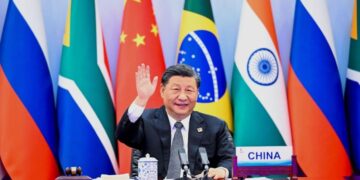
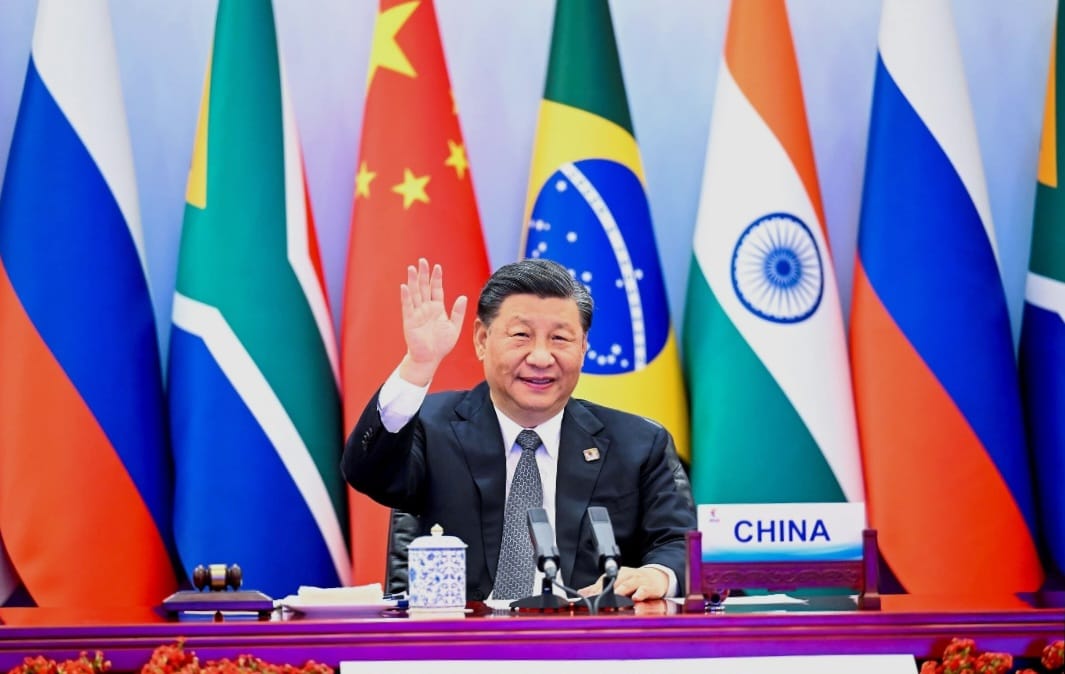
In 2013, during his first official foreign trip as President of the People’s Republic of China, Xi Jinping introduced a new vision to the world while delivering a lecture at the Moscow Institute of International Relations (MGIMO).
That vision was ‘building a global community with a shared future for mankind.
The idea of President Xi’s thought was to shape a new model of international relations at a time when protectionism and global instability were accelerating at an unprecedented speed.
Similarly, in the same year, 2013, during his visit to Central and Southern Asia, President Xi unveiled the Belt and Road Initiative (BRI), which is widely regarded by experts as the first in a series of initiatives that are shaping the future of humanity today.
In continuation with his vision for humanity, President Xi introduced four other series of important global initiatives, namely: -the Global Development Initiative in 2021, -the Global Security Initiative in 2022, -the Global Civilization Initiative in 2023, and -the Global Governance Initiative in 2025.
Global South experts are of the view that these noble initiatives represent a coherent, layered strategy by the Chinese leadership to reshape a global system that is facing turbulence and uncertainties.
They described the initiatives as pillars of China’s contemporary foreign policy and its vision for global order.
Together, the initiatives aim to promote development and stability worldwide, particularly across the Global South.
WHAT THE INITIATIVES MEAN FOR THE FUTURE OF MANKIND:
In a clear and succinct effort, BRI, GDI, GSI, GCI, and GGI were proclaimed as drivers of development, stability, cooperation, and good governance for the shared future of mankind.
Together, they reflect China’s vision of building a more inclusive and balanced international order, grounded in respect for sovereignty, non-interference, and mutually beneficial cooperation among Global South nations and the wider global community.
As noted by the United Nations Secretary General Antonio Guterres, the initiatives proposed by China are totally compatible with the UN Charter.
Notably, many countries view them as pragmatic and constructive solutions to the turbulence and uncertainties ravaging the global space.
As global development continues to face challenges characterized by the widening North-South divides and compounded by food and energy crises, it has been established that more than one billion people around the world live in extreme poverty, while armed conflicts and unnecessary wars are also on the rise, causing loss of lives and displacement of people from their homes.
Free trade infringement, sanctions, and bullying are on the increase, while hegemonism, unilateralism, and protectionism are resurging, placing multilateralism under growing pressure.
Global South experts believe that the vision of building a community with a shared future for mankind aligns with broader trends of social development, emphasizing peaceful coexistence where all countries are treated equally and none should be left in isolation.
There upon, many countries and regions around the globe are already working with China on building communities with shared futures in various forms.
Significant achievements have also been recorded in human nature relations, humanitarian development, security, and infrastructure development.
China has just begun the journey into its 15th Five-Year Plan period (2026-2030), and it is advancing steadily.
The country has committed to serve as an anchor of certainty in an uncertain world; and as a source of stability for the future of mankind.
According to its leadership, China will work with all interests to turn the vision of a community with a shared future for mankind into reality, with the sincere commitment to contribute to global development and progress for humanity.
THE FIVE NOBLE INITIATIVES AND PURPOSES FOR THE GLOBAL FUTURE:
(I) Belt and Road Initiative (BRI):

It was unveiled by President Xi in 2013. Since inception, more than 152 countries and organizations have incorporated into its schemes including G20, Asia Pacific Economic Cooperation (APEC), South East Asian Nations (ASEAN), Forum on China-Africa Cooperation (FOCAC), Shanghai Cooperation Organisation (SCO) among others.
BRI has also become a platform for achieving the United Nations 2030 Agenda for Sustainable Development.
Popularly known as “New Silk Road,” BRI focuses on global connectivity, infrastructure development financing, and the promotion of multilateral cooperation among member countries.
Often called the “project of the century”, BRI involves Chinese companies and investors financing the development of infrastructure around the globe such as ports, railways, power plants, highways, telecommunications, and building of dams.
Notable BRI completed and on-going projects are the China-Laos Railway, Hungary-Serbia railway, Lagos Lekki deep seaport, Addis Ababa-Djibouti Railway, Nairobi-Mombasa railway, China-Europe freight train, China-Pakistan Economic Corridor, and China-Kyrgyzstan-Uzbek railway.
(II) Global Development Initiative (GDI):
This initiative was launched in 2021 with the aims of accelerating the UN’s 2030 Agenda for Sustainable Development (SDG’s) and to promote a people-centred and practical model of international development.
As noted by President Xi Jinping, development holds the master key to solving all challenges.
GDI is a contribution of Chinese wisdom and solutions to advancing global development and directly addresses the real challenges and inclusive global growth.
In more than a decade, out of 169 specific targets of the 2030 SDG Agenda, many are stalled, with only about 35 per cent achieved, while about half are progressing slowly and 18 per cent regressed.
As a result of the slow progress of the 2030 Agenda for SDG’s, the GDI was on hand to support the timely implementation of the Agenda’s goals by revitalizing global development partnership, promoting stronger, greener and healthier global communities.
Over the years, the GDI has garnered support from more than 100 countries and international organizations, while about 70 countries have collectively joined the GDI Group of friends at the United Nations.
(III) Global Security Initiative (GSI):
Launched in 2022, the core idea of this initiative was to confront the emerging global security situation, aligning with the shifting international landscape by uniting the global community.
The initiative emphasizes dialogue, mutual respect, and peaceful resolution of disputes.
As President Xi noted, the Cold War mentality would only wreck the global framework, hegemonism and power politics would further endanger world peace, and bloc confrontation would only exacerbate security challenges in the 21st century.
However, this observation offers profound insights on the root causes of the global security predicament.
Typically, China has always been active in promoting dialogue wherever there is conflict, and it is the largest contributor with peacekeeping forces among the UN Security Council permanent members.
China has also leveraged mechanisms such as the Shanghai Cooperation Organization and others to steadily contribute to regional stability.
Specifically, there are “six basic commitments,” put forward by President Xi, including respect for sovereignty and territorial integrity, abiding by the UN Charter, peacefully resolving disputes, and maintaining security in traditional and non-traditional spheres.
It indisputable that China’s concrete peace efforts were evident in the China brokered Saudi-Iran reconciliation deal and the recent China-Pakistan peace efforts that proposed five-peace initiatives to de-escalate the conflict in Iran and the Gulf arising from the attack on Iran by the U.S. and Israel.
These are yet another important public good initiated by China for the world.
(IV) Global Civilization Initiative (GCI):
It is the third in President Xi’s series of four global initiatives after the BRI that were designed to manage different aspects of the global system.
According to experts, GCI is the most philosophical of the initiatives before it.
Launched in 2023, it advocates for respect for diversity of civilizations and rejects the hierarchy of values or the imposition of one civilization’s norms on others.
For instance, some countries at present, pursue unilateralism and protectionism, clinging to the theories of the “clash of civilizations” and “civilizational superiority.”
In response to these pressing global challenges, GCI offers a shared cultural foundation for countries to address their common struggles.
GCI can be summed up into four advocacies : to respect the diversity of civilizations, to uphold the common values of humanity, to attach importance to inheritance and innovation of civilizations, and to strengthen international people-to-people exchanges and cooperation.
(V) Global Governance Initiative (GGI):
Unveiled in 2025 by President Xi during the occasion of the Shanghai Cooperation Organization (SCO) summit in Tianjin. Over the meeting, President Xi spiritedly delivered a very important historic declaration to the audience comprising leaders of countries of about half of the world’s population.
The title of his statement was “Pooling the strength of the Shanghai Cooperation to improve Global Governance”.
President Xi then unveiled a sweeping proposal for a new global order themed: “Global Governance Initiative (GGI)”, positioning it as a blueprint for fairness, and more inclusive international cooperation where all nations and people will be equal.
According to President Xi, the proposed GGI was equally to promote the building of more just and equitable global governance system and work together for a community with a shared future for humanity.
He called on nations to embrace multipolarity and reject hegemonism, maintaining that China is ready, together with all parties to uphold courageously the great principle and the common good of the world that will promote the correct historical perspective on World War II, resolutely safeguard the fruits of victory.
GGI came at a time the global stage is experiencing uncertainties and turbulence to the extent that the UN and multilateralism as its principles are being challenged. GGI comprises of “Five Core Concepts” which include: Adherence to sovereign equality, Staying committed to international rule of law, Staying committed to multilateralism, Adhering to people-centred approach, and Focusing on taking real actions/results.
Global South experts are of the view that the unveiling of the GGI was timely, at a time when the world is fraught with armed conflicts, particularly in Gaza, Ukraine, Sudan and Iran/Gulf region.
Unequivocally, the introduction of GGI to the world by President Xi, will open more opportunities and strengthen institutions for the Global South nations in areas of good governance, security, development finances, technology transfer, corporate digitization, agro-economy, green economy, and skill training.
It will also encourage stronger representation in Global Affairs, in particular South-South cooperation, just as most of the western powers dominate major multilateral institutions in global economic and financial governance.
Global South accounted for about 80 percent of the world’s population and over 40 percent of economic output, yet it remains underrepresented in international institutions.
CONCLUSION:
Taken together, the five initiatives form a comprehensive framework for addressing development, security, governance, and cultural cooperation in an interconnected world.
They offer pathways for inclusive globalization and stronger South-South cooperation.
For the Global South, these initiatives provide opportunities to close development gaps, strengthen infrastructure, enhance peace and stability, and increase representation in global decision-making.
*Sale is Abuja based Global South Affairs Analyst* (lawalmaida1@yahoo.com)
(vitalnewsngr.com)