
By EMMANUEL KEHINDE
ILORIN
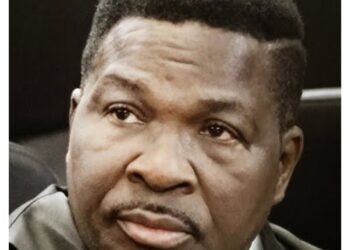
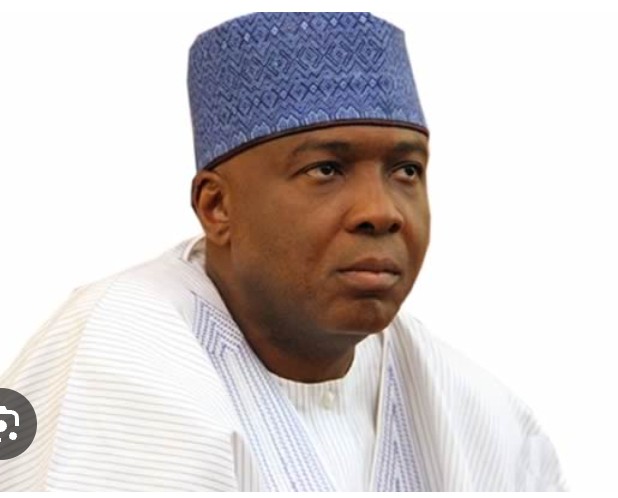
A former Senate President, Dr Bukola Saraki, will be arraigned on July 22, 2026, over an alleged defamation against the current Governor of Kwara State, Abdulrahman Abdulrasaq, according to court proceedings on Friday.
Saraki, who is also a former Governor of Kwara State was dragged before an Ilorin High Court presided over by Justice M.O. Folorunsho.
The charge suit No: KWS/151c/226 between the People of Kwara State and Saraki, on Count one read: “That you DR. ABUBAKAR BUKOLA SARAKI, on or about 17th April, 2026 at llorin, Kwara State, within the jurisdiction of this Honourable court, committed an illegal act, to wit; you published and shared statements on social media platforms, particularly on Face book at
https://www.facebook.com/bukola.saraki, X (formerly known as Twitter) at https://x.com/bukolasaraki/status/204511455985427 555?=46 and national newspapers containing insulting, derogatory and abusive languages that the Governor of Kwara State, His Excellency, Mallam AbdulRahtnan AbdulRazaq is not educated up to secondary school education, which you knew or ought to have known to be false, but you intentionally published the said statements in a manner to insult or provoke the Governor of Kwara State, His Excellency, Mallam AbdulRahman AbdulRazaq and the Kwara State Government, which you did in a manner likely to cause breakdown of public peace and thereby committed an offence punishable under Section 399 of the Penal Code, CAP. P4, Laws of Kwara State, 2006.
Saraki’s counsel, J.A. Mumini, SAN, was absent in court but sent a lawyer T.A. Hammed from his office while the complainants were represented by R.O. Balogun, SAN, Taiye Oniyide, (SAN, and the stateDirector of Public Prosecutions, Ayoola Idown Akande.
Balogun led the prosecution team
Inspite of Mumini’s absence, the court held that the matter should go on.
On the preliminary objections, the Court held that the depositions contained in the defendant’s supporting affidavit and further affidavit did not constitute legal arguments or written submissions as contended by the prosecution and therefore dismissed the objection.
On the applicability of the Cybercrimes Act, the Court held that the charge against the Defendant did not fall within the scope of offences contemplated under section 40 of the Cybercrimes Act, having regard to the interpretation of the provision and relevant judicial authorities.

The Court particularly noted that the allegedly defamatory publications were made not only on Twitter and Facebook but were also published in national newspapers.
On territorial jurisdiction, the Court held that it possessed the requisite territorial jurisdiction.to entertain the charge notwithstanding that part of the alleged publication was made online.
The Court reasoned that the complainant and the persons allegedly affected by the publication resided within the territorial jurisdiction of the Court and relied on the decision in C.R.C. v. Stanbic IBTC in reaching its conclusion.
On the allegation of abuse of court process, the Court held that the Defendant failed to establish how the mere filing of a criminal charge against him constituted an abuse of court process.
The allegation was therefore dismissed for want of proof.
On the alleged violation of the defendant’s constitutional right to freedom of expression, the court held that the protection afforded under section 39 of the Constitution of the Federal Republic of Nigeria, 1999 (as amended) does not extend to defamatory publications capable of injuring the reputation of another person.
Accordingly, the defendant could not rely on the constitutional guarantee of freedom of expression as a defence.
On the validity of the charge, the Court held that the charge complied with section 36(12) of the Constitution of the Federal Republic of Nigeria, 1999 (as amended).
The Court further rejected the Defendant’s contention that the charge disclosed no prima facie case because it allegedly failed to plead facts showing that the publication was capable of causing a breach of the peace as contemplated under section 399 of the Penal Code.
On the allegation of denial of fair hearing, the Court dismissed the Defendant’s contention that he would not receive a fair trial because the Governor of Kwara State would allegedly prevent him from effectively cross-examining prosecution witnesses.
The court observed that the Governor was not listed as a prosecution witness and reiterated that the burden of proving the criminal allegations rests solely on the Prosecution.
On the defendant’s physical presence, the Court held that it was competent to dispense with the defendant’s physical appearance for the purpose of hearing and determining the preliminary objection, the application being interlocutory in nature.
On the necessity of determining the objection first, the Court held that the defendant’s objections, which challenged the competence of the proceedings on grounds of improper service, lack of territorial jurisdiction and other jurisdictional issues, were fundamental issues that ought to be resolved before the substantive hearing of the charge.
Consequently, having resolved all the issues raised against the defendant, the court found no merit in the preliminary objection and accordingly dismissed the defendant’s objection in its entirety, directing that the criminal proceedings should proceed on the merits.
It adjourned the case to 22 nd day of July 2026 for arraignment.
(vitalnewsngr.com)