
Governor Mai Mala Buni of Yobe State has called for a fundamental shift in Nigeria’s political and social discourse, urging citizens and leaders alike to allow the nation’s strengths—not its worst elements—define its identity.
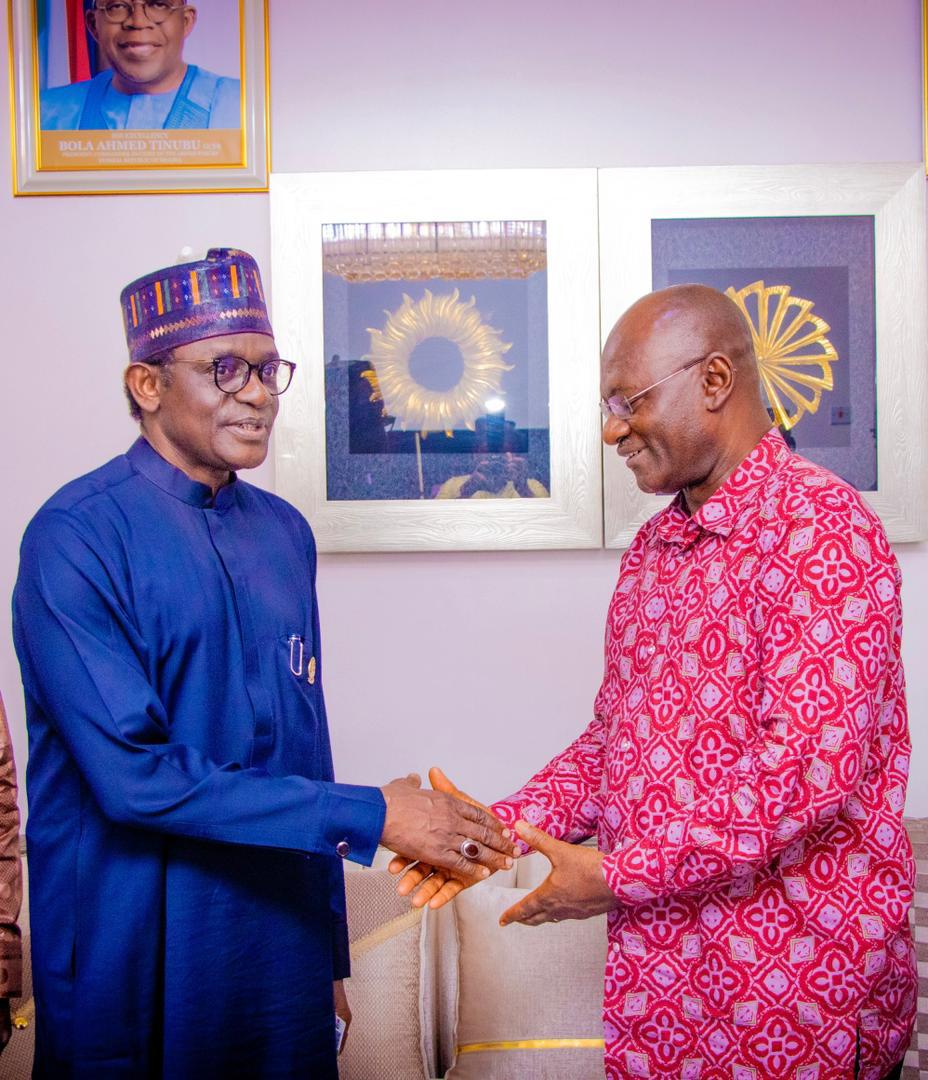
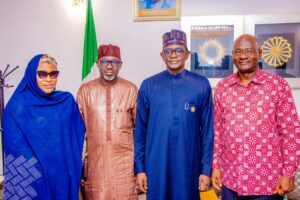
Buni made the appeal during a courtesy visit by the Director-General of the Institute for Peace and Conflict Resolution, Joseph Ochogwu, warning that rising divisions and toxic narratives pose a serious threat to national stability.
Framing Nigeria’s imperfections as challenges to be resolved rather than triggers for disintegration, the governor stressed the need for unity and collective responsibility.
“Whatever imperfections that our system has should not lead to the destruction of our country.
“We are human beings—solution providers, divinely put together,” he said.
Buni lamented what he described as increasingly divisive rhetoric from political actors, noting that such tendencies deepen fault lines instead of fostering cohesion.
He said : “There is need for peace and reconciliation.
“Some political leaders have made statements that are so divisive, which is not good for the people.”
He urged Nigerians to embrace dialogue and conflict resolution as tools for national survival, emphasizing that differences must be managed constructively.
The governor insisted that Nigeria must not be defined by its worst actors, arguing that the majority of citizens are law-abiding and patriotic.
“The good should be what brands our nation—not the worst,” he declared.
He, however, criticised sections of the media and political class for amplifying narratives that undermine national unity, accusing them of promoting pessimism and division.
Buni expressed outrage over what he described as unpatriotic reactions to the killing of security personnel, condemning any form of celebration or trivialisation of such losses.
“It is not correct, it is not good, for anyone to celebrate the death of those protecting us,” he said, referring to fallen military personnel.
On democratic practice, the governor warned against equating freedom with disorder, stressing that respect for institutions, leaders, and societal values is essential.
“Democracy does not amount to disrespect. It should be rule-based, decent, and guided by decorum,” he said.
He cautioned that without discipline and mutual respect, democracy risks losing its value and effectiveness.
Buni also raised concerns over the role of social media in shaping public discourse, accusing some users of attacking institutions and leadership without accountability.
“There is need for regulation of social media to an extent,” he noted, pointing to what he described as widespread misuse.
The governor decried Nigeria’s culture of continuous politicking, arguing that governance has been overshadowed by early and prolonged electioneering.
“Politics now starts from day one of a new government. What time is left for governance?” he queried.
He contrasted this with more stable democracies, where post-election periods are focused on delivering governance and development.
Buni criticised a mindset driven by personal ambition at the expense of national progress.
“If I am not there, let everything spoil—it must stop. It does not build any nation,” he warned.
He added that undermining leadership ultimately weakens the country itself, calling for greater respect for authority and institutions.
The governor also called on religious leaders to promote unity, warning against messages that incite division.
“A preacher should be a preacher of peace, not hatred,” he said, urging clerics to reinforce hope and national cohesion.
Looking ahead, Buni stressed that political actors must prioritise national unity over personal ambitions, describing Nigeria’s formation as divinely ordained.

“Nigeria is a divine creation… it must be preserved,” he said.
Earlier, Ochogwu praised the governor as a consistent voice for peace and nation-building, describing him as a statesman committed to reconciliation.
“He has never made divisive statements… his voice is critical in promoting unity, especially in a time of deepening national divisions,” he said.
The visit, he added, was aimed at strengthening collaboration in advancing peacebuilding efforts across the country.
(vitalnewsngr.com)