A senior United Nations official has issued a strong warning that governments and institutions risk deepening instability and policy failure if they continue to sideline young people.
The Official insisted that meaningful youth inclusion is now a critical condition for peace, stability, and sustainable development.
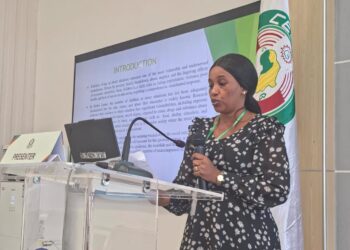
Speaking in Abuja at an interactive session with youth, the United Nations Assistant Secretary General for Youth Affairs and Head of UN Youth Affairs, who is currently on an official visit to Nigeria, Mr. Felipe Paullier, said global institutions are failing to evolve at the pace required to match today’s rapidly changing realities, particularly the demographic shift driven by an unprecedented youth population.
The event, themed “Open-Door Youth Engagement,” convened by youth-led organizations, young women’s groups, youth peacebuilders, innovators, students, young professionals, persons with disabilities, and underserved youth communities for an interactive dialogue with representatives of the Government and the United Nations.
According to Paullier, young people now represent the largest, most educated, and most interconnected generation in history, especially in developing countries like Nigeria.
However, this demographic advantage is being undermined by persistent gaps in access to quality education and limited opportunities for meaningful participation in governance.

He noted : “Engaging young people in policy is not just an option—it is a condition if we want to achieve peace, stability, and effective solutions.”
He said the UN acknowledged a growing disconnect between policy formulation and real-world impact, describing the process of closing this gap as complex but urgent.
He admitted that while global frameworks exist, including the United Nations Sustainable Development Goals (SDGs) and youth-focused strategies, implementation at the national level remains inconsistent.
He emphasized that governments must move beyond rhetoric and adopt clear, actionable commitments that integrate youth voices into decision-making processes.
He said central to this effort is the UN’s broader development roadmap, which includes commitments to embed youth participation not only at global levels but also within country-level governance and policy execution.
Addressing concerns over the sustainability of policies, he warned that many initiatives fail because they are not designed to endure or adapt over time.
The solution, the official argued, lies in institutionalizing youth engagement rather than treating it as a temporary or symbolic exercise.
He noted that nearly half of the world’s population under 30, and significantly higher percentages across Africa, the stakes are even higher for countries on African continent.
He said : “Youth engagement should not be seen as a project—it must be embedded at the heart of governance, financing, and development planning.”
The UN also called for increased investment in youth-driven innovation, noting that young Nigerians are already transforming sectors such as agriculture, technology, and the creative economy through ingenuity and entrepreneurship.
(vitalnewsngr.com)