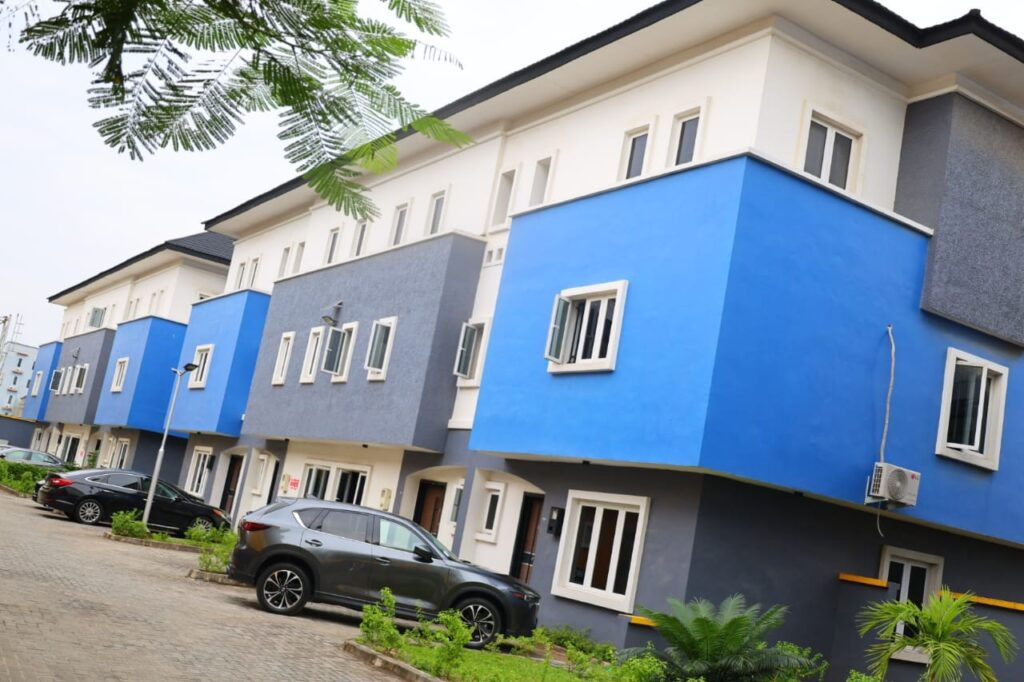

A Federal High Court in Ikoyi, Lagos, has ordered the permanent forfeiture of 52 terrace and maisonette housing units in the upscale Lekki area of Lagos State to the Federal Government, handing the Economic and Financial Crimes Commission (EFCC) one of its biggest asset recovery victories in recent years.
Justice Alexandra Owoeye delivered the landmark judgment on July 15, 2026, after granting an application filed by the Lagos Zonal Directorate 2 of the EFCC, which argued that the properties were reasonably suspected to have been acquired with proceeds of unlawful activities.
The forfeited properties are located at Mercyville Estate, Covenant Way, off New Road, Ilasan, Lekki, and were recovered from Fielddreams Limited, Ifeanyi Nweke and Amex Savings and Loans Limited, according to the anti-graft agency.Legal
The ruling followed a lengthy legal process that began on August 14, 2024, when the EFCC secured an interim forfeiture order from Justice Akintayo Aluko after filing an ex parte application.
As required by law, the court directed the commission to publish the interim forfeiture order in a national newspaper, inviting anyone claiming ownership or interest in the properties to appear before the court and show cause why the estate should not be permanently forfeited to the Federal Government.
Following the publication, the respondents filed a counter-affidavit opposing the final forfeiture application.
They initially claimed that the funds used to develop the estate were generated from the sale of part of a landed property and 29 terrace and maisonette housing units, which they valued at approximately ₦1.9 billion.
However, the respondents, later changed their position by alleging that several of the housing units had not been completed.
The EFCC argued that the new claim directly contradicted their earlier sworn affidavit, in which they maintained that proceeds from previous property sales were used to complete the furnishing and interior decoration of the remaining units and that construction of the estate had already been completed in 2020.
During the hearing, EFCC counsel Franklin Ofoma informed the court that the commission had fully complied with the publication order issued during the interim forfeiture proceedings.
He said the application for final forfeiture was supported by a 31-paragraph affidavit deposed to by Afolabi Seyi Oladele, a litigation officer in the commission’s Legal Department.
The anti-graft agency maintained that its investigations established reasonable grounds to believe that the properties represented proceeds of unlawful activities, making them liable to forfeiture under Nigeria’s asset recovery laws.Africans & Diaspora.

The commission also informed the court that the second respondent, Ifeanyi Nweke, is a fugitive facing criminal prosecution.
According to the EFCC, Nweke failed to appear before Justice R.A. Oshodi and Justice Okunuga in separate criminal proceedings despite being required to answer charges filed against him.
The EFCC further disclosed that two subsisting warrants of arrest had already been issued against Nweke after he allegedly jumped the administrative bail earlier granted to him by the commission.
In her judgment, Justice Owoeye held that the respondents’ affidavit contained material contradictions that undermined its credibility. She ruled that the court could not selectively rely on conflicting pieces of evidence presented by the respondents.Legal
Consequently, the judge rejected the respondents’ affidavit in its entirety, holding that there was no credible opposition to the EFCC’s application for final forfeiture.
Justice Owoeye further ruled that the commission had successfully demonstrated reasonable grounds to suspect that the estate was acquired with proceeds of unlawful activities.
She therefore granted the application and ordered that all 52 terrace and maisonette housing units be permanently forfeited to the Federal Government.
The judgment represents another significant milestone in the EFCC’s campaign against corruption, money laundering and financial crimes.
In recent years, the commission has intensified the use of Nigeria’s non-conviction-based asset forfeiture framework to recover assets believed to have been acquired through illicit wealth, even where related criminal proceedings remain pending.
Legal analysts say the ruling reinforces the courts’ support for lawful asset recovery while underscoring the importance of presenting consistent and credible evidence in forfeiture proceedings.Africans & Diaspora
With the judgment, ownership of the 52 housing units now officially vests in the Federal Government, which is expected to determine the future use of the properties in line with existing laws and national interest.
(vitalnewsngr.com)