
By Saidu Adamu
Jalingo
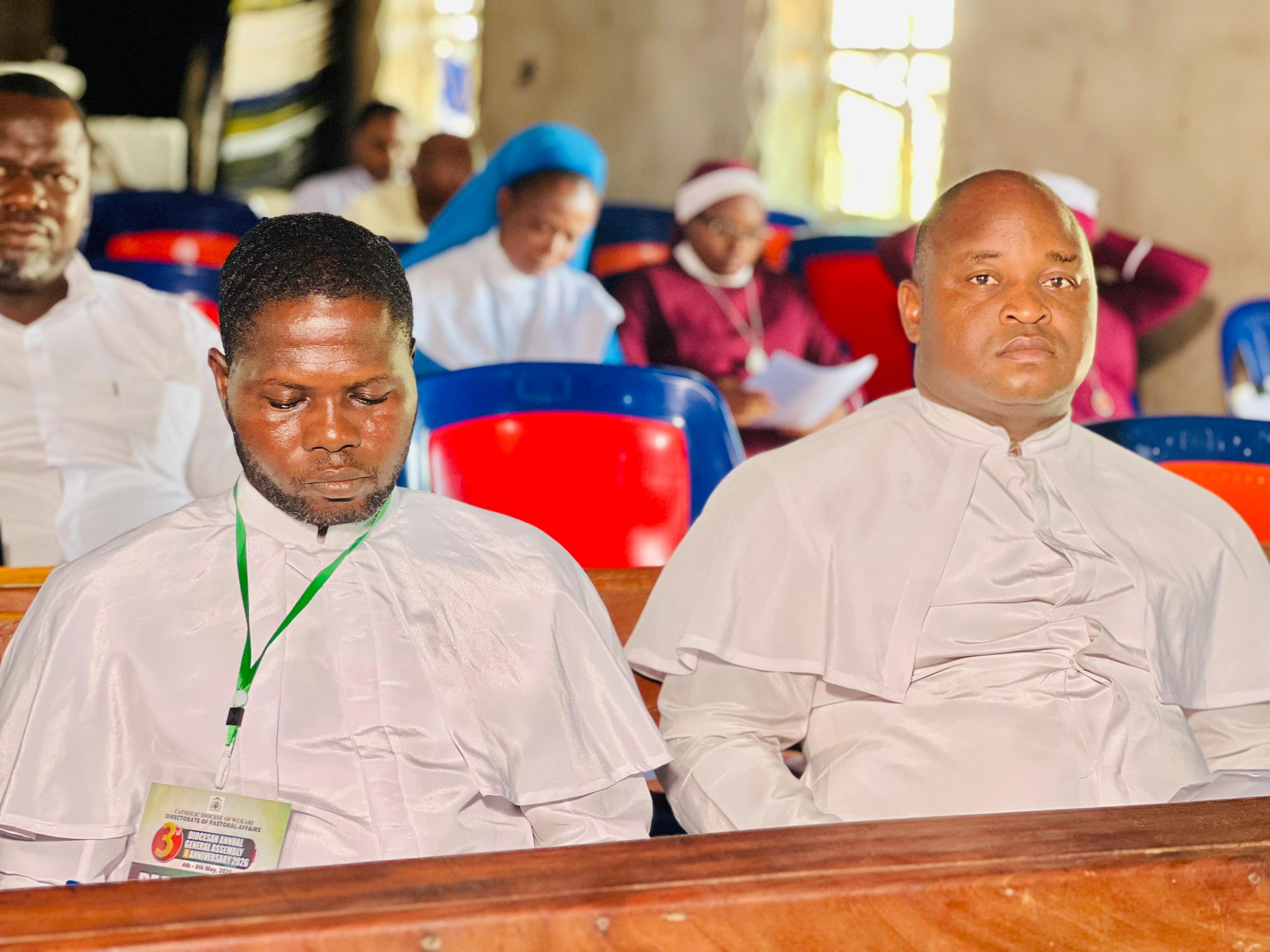
The Catholic Diocese of Wukari in Taraba State has called for effective deployment of technology in the electoral process and the establishment of an election offences tribunal to tackle election malpractice and ensure that those who try to truncate the process are made to face justice.
This position is contained in a communique issued at the end of the Diocesan Third General Assembly held at the Cathedral Hall in Wukari and signed by the Bishop, Most Revd Mark Maigida Nzukwein and Very Revd Fr Simon Akuraga, Chancellor of the Diocese.
The communique noted that the prevailing insecurity in Southern Taraba has made things extremely tough for the Diocese in the last few months especially with the destruction of several worship places, killings and displacement of parishioners and the fire incident that destroyed the Cathedral.
The General Assembly noted that good governance is a prerequisite for any meaningful development and serious engagement with the people.
It called for deliberate actions to be taken ahead of the 2027 general elections to ensure credible elections and enthronement of justice and peace for all irrespective of tribe, religion, political affiliation and region.
“Where good governance exists, corruption is minimized, public trust is strengthened, human rights are protected and sustainable development is promoted for the benefit of all citizens.
“As one of the most influential institutions in society, the Church serves both as a mirror reflecting societal realities and as a moral catalyst capable of inspiring political and social reforms.
“The Church’s mission is fundamentally spiritual; however, it cannot remain indifferent to social injustice, corruption, oppression and poor leadership that undermine human dignity.
“For the Church to effectively promote good governance in Nigeria, it must faithfully balance its spiritual mandate with a consistent, non-partisan commitment to justice, truth, accountability and the rule of law.
The meeting therefore, affirmed that for good governance to be possible in Nigeria there is every need to dismantle, what it described as, “all unjust structures that place the wealth of this country in the hands of a privileged few,” the church saud in the communique.
Accordingly, it observed that the penalty for indifference to good governance is to be ruled by evil men and therefore urged all Christ’s faithful and citizens to, as a matter of necessity, actively participate in choosing their leaders.
“The foundation of good governance rests on three core principles: the rule of law, accountability and transparency, the communique stressed.
“These are essential for building trust, strengthening institutions and ensuring that leadership remains people-centred,” it said
While acknowledging that no leadership system is without challenges, various obstacles confront political leadership in Nigeria, it said.
“However, these challenges can be addressed through deliberate and sustained reforms.
“We recommend the following measures to promote effective political leadership and good governance in Nigeria :
(i) leadership renewal and value reorientation;
(ii) constitutional reforms aimed at achieving true federalism;
(iii) strengthening of institutions, especially the judiciary and strict adherence to the rule of law.
“We also recommend deepening anti-corruption norms and promoting transparency; encouraging civic awakening, youth engagement and digital activism; pursuing electoral reforms to ensure credible elections.
The meeting also suggested reforming the security sector with a focus on human-centered security; promoting economic diversification and poverty reduction; and Strengthening political party systems and internal democracy and entrenching good governance as a core political values.
“We affirm that credible elections are the foundation of any true democracy, reflecting the will of well-meaning Nigerians and ensuring legitimate governance.

The meeting also argued that persistent challenges such as electoral malpractice, vote buying, violence and result manipulation continue to undermine public trust in Nigeria’s electoral process.
“These realities make comprehensive electoral reforms not only desirable but urgent.
“We call for the full and transparent deployment of technology in the electoral process, including electronic collation and direct transmission of results from polling units to central servers.
“The consistent use of the Bimodal Voter Accreditation System (BVAS), the INEC Result Viewing Portal (IReV), and other reliable technologies should be ensured to minimize human interference and prevent result manipulation by electoral officials and political actors, especially on election day.
“Furthermore, the Independent National Electoral Commission (INEC) must be truly independent.
“This requires removing executive control over the appointment of its Chairman and Commissioners, as well as establishing an independent funding mechanism to safeguard it from undue influence by the executive arm of government.
“An Electoral Offences Commission should be established and empowered to investigate and prosecute electoral offences such as vote buying, violence and election rigging. In addition, diaspora voting should be introduced, in line with practices in other democracies, to enable Nigerians abroad to participate in the electoral process,” the communique reads in parts.
The communique decried the resurgence of communal conflicts among communities in Southern Taraba, most especially in Takum and Donga Local Government Areas, as well as Yangtu Special Development Area that have left scores of people injured, maimed and killed with property worth millions of naira and means of livelihood destroyed.
“The records of the Diocese show that over 98,000 persons have been displaced, including 16 priests, while 217 churches have been completely destroyed, while eight priests residences have also been levelled. (vitalnewsngr.com)