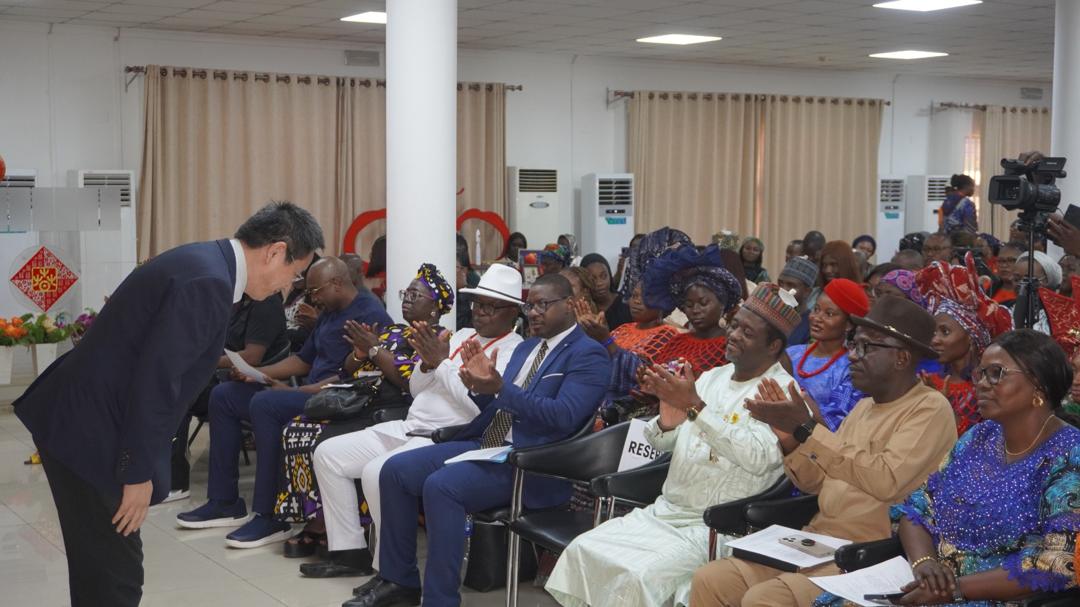

Nigeria and China have reaffirmed their strategic diplomatic and cultural partnership, with top government officials, diplomats and international development partners using the 2026 Chinese New Year and Lantern Festival celebration in Abuja to call for deeper collaboration in culture, education, tourism and women’s economic empowerment.
The event, held at the China Cultural Centre brought together high-level delegates from the Federal Government of Nigeria, the diplomatic corps and cultural stakeholders from China.
The celebration also marked the 55th anniversary of diplomatic relations between both countries, as well as global efforts to promote people-to-people diplomacy under cultural exchange platforms.
Speaking at the event, the Ambassador of China to Nigeria, Yu Dunhai, described the Lantern Festival as a global symbol of unity, hope and renewal.
He said the festival’s growing international recognition following its inscription on the UNESCO Intangible Cultural Heritage list reflects the global relevance of Chinese culture.
The Ambassador, who was represented by the Cultural Counselor of Chinese Embassy and Director, Chinese Cultural Centre in Nigeria, Yang Jianxing, emphasized that cultural diplomacy remains a strong pillar of China–Nigeria relations.
He noted that for over five decades, both nations have deepened cooperation in trade, infrastructure development, education and technology transfer.
He stressed that cultural exchange promotes mutual understanding beyond formal diplomacy.
“Civilizations are enriched by exchange and mutual learning,” he said, highlighting shared cultural values such as respect for family, community cohesion and social harmony.
On his part, the Nigeria’s Permanent Secretary, Federal Ministry of Art, Culture, Tourism and Creative Economy, Dr. Mukhtar Muhammad, described the celebration as a symbolic fusion of two great civilizations and a platform for advancing gender-inclusive development.
Muhammad emphasized that combining the Women’s Carnival with the Lantern Festival was intentional, reflecting the strategic role of women in shaping cultural identity and economic progress.
He noted that women in both Nigeria and China continue to drive innovation, preserve cultural heritage and contribute significantly to national development.
“As lanterns light up the night sky, our women light the path to social and economic progress,” he said.
He pledged that the Federal Government would continue implementing policies aimed at expanding opportunities for women in the creative and digital economy.
He added that Nigeria would work toward improving women’s visibility in global cultural and economic spaces through stronger tourism promotion, creative industry investment and international cultural collaborations.
Representatives of the UNESCO Office in Nigeria, Dr. Jean-Paul Ngome Abiaga, also spoke at the event, describing culture and education as powerful tools for sustainable development and international cooperation.

He emphasized that the celebration’s timing — coming just days before International Women’s Day — reinforced global commitments to gender equality.
Ngome commended progress made in women’s empowerment in both countries, highlighting China’s achievements in expanding women’s access to higher education, entrepreneurship and technology-driven industries, noting that women now represent a significant share of university enrolment and workforce participation in China.
In Nigeria, UNESCO praised ongoing initiatives such as national women empowerment programmes and advocacy campaigns promoting girls’ education and economic inclusion.
The organization reiterated that investing in women’s education and skills development remains essential to achieving long-term economic stability and social progress.
Speakers at the celebration urged both nations to translate cultural goodwill into stronger economic partnerships.
They highlighted opportunities in tourism development, creative economy expansion, digital skills training and youth entrepreneurship.
Officials said cultural exchange programmes have already contributed to growing mutual appreciation of music, film, fashion and culinary traditions between both societies.
Participants noted that Nigerian and Chinese women are increasingly participating in cross-border cooperation projects, with many contributing to business, technology and community development initiatives in both countries. (vitalnewsngr.com)