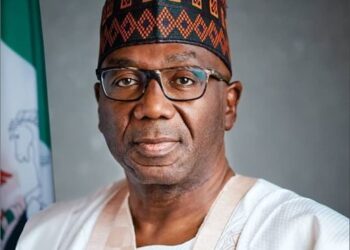

A rights Activist, Idris Miliki Abdul has suggested recruitment of 20 vigilantes in each of the 239 wards in Kogi State to complement the efforts of the conventional security personnel.
Miliki made the suggestion in a statement obtained by Vital News in Lokoja on Tuesday.
Idris Miliki Abdul is the
Executive Director,Conscience for Human Rights and Conflicts Resolution (CHRCR) based in Lokoja, Kogi State.
He suggested that the vigilantes that will be so recruited should be trained and equipped by the police and DSS with the logistics and financial support from the state government.
Miliki, further suggested that the vigilantes should be deployed and made to stay permanently in their various ward or locality.

This, he said will fill the gap being created by constant redeployment conventional security personnel from communities battling insecurity and other violent crimes in the state.
He welcomed the recent closure of schools, markers and motor parks in some parts of the state, describing the action as proactive and a welcome development.
Miliki, however, justified his suggestion for the recruitment of 20 vigilantes for each of the 239 wards in the state, saying this will enable government to take full control of the security situation of the state.
“The conventional security personnels and their agencies, which include the Nigeria Police Force (NPF), the Military, DSS, and all the Paramilitary are Federal staff that are currently involve in the onslaught in the security effort across the State.
“They that are not permanent residents in a particular location for a long time and can be redeployed any time for special duties or otherwise.
“And many of them does not speak the local languages,” he said.
He said : “Community Resilience, engagement and support can do a lot the current violence extremism that is currently being experienced in our environment.”
The Activist explained that
“violent extremism in Nigeria is often fuelled by political and economic factors such as governance failure, corruption, inequality, and lack of opportunities, all of which create conditions conducive to radicalization, perceived political exclusion, unemployment, and poverty make individuals vulnerable to extremist narratives that exploit social and economic grievance.
“Additionally, weak institutions and poor service delivery enable extremism to thrive.
“Nigeria’s response to violent extremism remains fragmented and uneven.
“These interventions, while valuable in their own right, often operate in silos, lacking the strategic coordination, shared data system and unified policy directions necessary for sustained impact.
“One of the most persistent challenges undermining the effectiveness of Nigeria response to Violent Extremism is the lack of strategic coordination among Federal, State, and local actors.
“While each level of government plays a critical role in security and peacebuilding, there are often disconnected, duplicative, or misaligned, resulting in fragmented intervention and missed opportunities for synergy.”
-National integration of PCVE Strategies –
To effectively counter the evolving threat of violent extremism across Nigeria, Miliki stated that it is important to align the efforts of the federal, state and local governments under a unified, coherent framework that promotes consistency, accountability, and shared objectives.
“Fragmented interventions where each tier of government operates in isolation have led to duplication of effort, policy contradictions, and inefficient resources utilization.
“A harmonized approach ensure that all actors are working toward a common vision, with clearly defined roles and measurable outcomes,” he said. (vitalnewsngr.com)