
The Federal Government has reiterated its commitment to tackling drought, desertification, and land degradation through an updated and more responsive national policy framework.
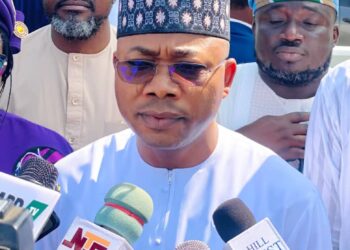
The Minister of Environment, Malam Balarabe Lawal, stated this on Tuesday in Abuja while delivering a keynote address at a two-day validation workshop on the review of the National Drought and Desertification Policy.
The workshop, brought together stakeholders from federal and state governments, development partners, civil society organisations, research institutions, and local communities.
Lawal described drought and desertification as serious environmental threats with far-reaching consequences for agriculture, water security, livelihoods, and national stability, particularly in Nigeria’s arid and semi-arid regions.
He noted that farmers and pastoralists are among the worst affected, as prolonged dry spells lead to crop failure, livestock loss, and increased poverty, while advancing desert conditions continue to reduce land productivity and strain natural resources.
The minister explained that the reviewed policy became necessary due to growing climate risks, population pressure, and changing land-use patterns.
He said the revision process began in July 2025 with an inception meeting involving representatives from all 36 states and the Federal Capital Territory.

According to him, the validation workshop is meant to ensure that the revised document is practical, inclusive, and implementable, with clear strategies, financing mechanisms, and monitoring systems.
Lawal assured participants that the final policy would not be shelved after approval, stressing that government would lead its implementation while working closely with the private sector, civil society, academia, and local communities.
He called on stakeholders to actively contribute during technical sessions, share experiences, and propose workable solutions that reflect the realities of different ecological zones across the country.
The minister also appreciated development partners for their continued support in strengthening Nigeria’s environmental and climate response initiatives.
Declaring the workshop open, Lawal expressed optimism that the revised policy would significantly improve national efforts to combat desertification, restore degraded lands, and build resilience against drought.
On his part, the Permanent Secretary of the Ministry of Environment, Mahmud Kambari, noted that Nigeria is increasingly vulnerable to drought, desertification, and land degradation, with serious implications for food security, livelihoods, biodiversity, and national development.
He said climate change and unsustainable land and water use practices have further deepened the country’s exposure to environmental risks.
Kambari explained that the existing policy framework, though useful in the past, no longer adequately addresses emerging climate realities and evolving national and international commitments.
He said this necessitated a comprehensive review aimed at strengthening early warning systems, improving preparedness, and building resilience against environmental shocks.
He added that the revised policy must align with Nigeria’s obligations under the United Nations Convention to Combat Desertification (UNCCD), including its Land Degradation Neutrality targets.
According to him, the ministry, through its Department of Desertification, Land Degradation and Drought Management, would ensure effective coordination and implementation of the new policy.
The Director, Department of Desertification and Drought in the Ministry of Environment, Regina Nwaneri explained that the validation workshop is focuses on validating an updated Desertification, Land Degradation and Drought Management Policy.
Sge stressed that the existing policy dates back to 2007 and no longer reflects current realities.
(vitalnewsngr.com)