
Nigeria’s exports to China surged by 81 per cent to $2.25 billion in the first half of 2026, signalling a significant expansion in economic relations between the two countries, as total bilateral trade rose by 35 per cent to $17.4 billion within the same period.
The development, alongside China’s new zero-tariff policy for 53 African countries, including Nigeria, is expected to open fresh opportunities for Nigerian exporters, deepen access to the Chinese market and strengthen Africa’s participation in global trade.
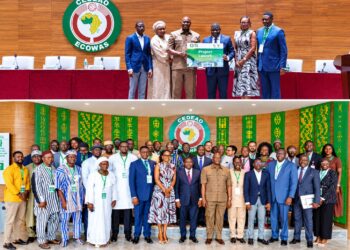
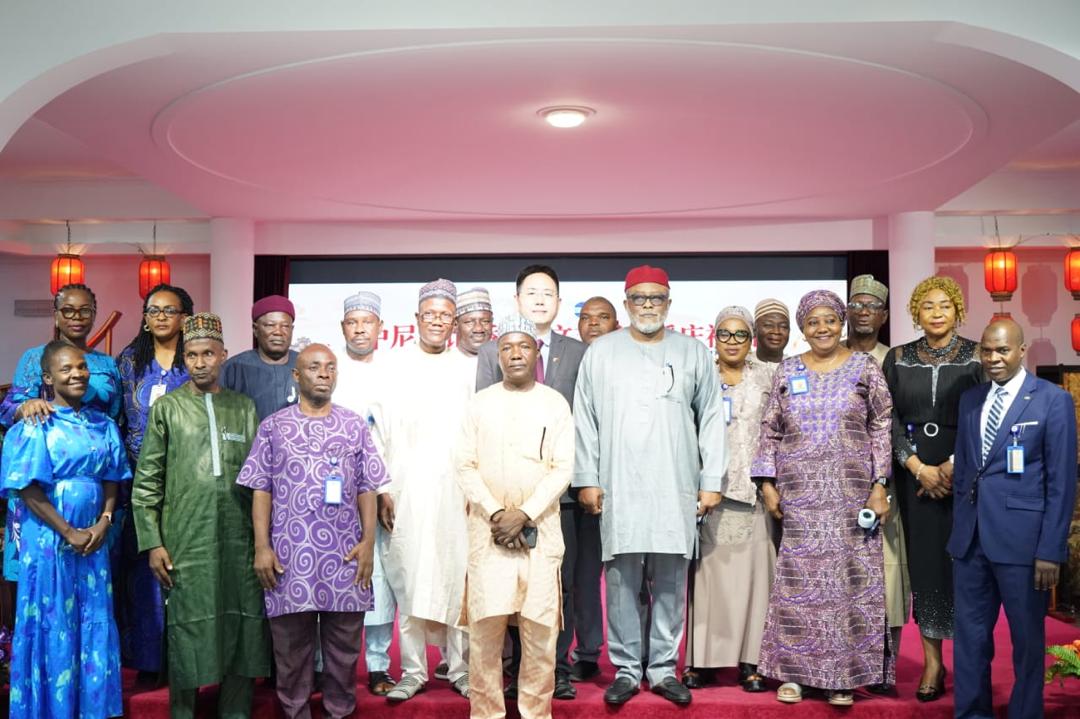
The figures were disclosed by the Cultural Counsellor of the Chinese Embassy in Nigeria and Director of the China Cultural Centre in Nigeria, Mr Yang Jiaxing, at the 2026 launch ceremony of the Voice of Nigeria (VON) China-Nigeria Bridge Programme.
Yang said the sharp increase in Chinese imports from Nigeria reflected the growing economic engagement between both countries.
He added that the introduction of zero tariffs on imports from eligible African countries had created a more favourable environment for expanding trade.
He said China’s trade with African countries exceeded $207.4 billion in the first half of 2026, representing a record performance for the corresponding period, while its imports from the continent reached $28.5 billion between May and June, an increase of 23.5 per cent year-on-year.
According to him, aquatic products, textile raw materials, specialty fruits and other African commodities recorded double-digit growth, reflecting expanding demand for products from the continent.
Nigeria’s performance was particularly encouraging, with imports from the country increasing by 81 per cent in the first half of the year.
“In the first half of this year, bilateral trade between China and Nigeria reached $17.4 billion, up 35 per cent year-on-year. China’s imports from Nigeria amounted to $2.25 billion, representing a remarkable increase of 81 per cent,” Yang said.
He added that Chinese imports from Nigeria recorded year-on-year growth of more than 40 per cent in each of May and June.
The figures come amid efforts by China to strengthen its economic engagement with Africa through expanded market access, trade facilitation and increased cooperation in strategic sectors.
Yang said China’s zero-tariff policy for 53 African countries with which it maintains diplomatic relations, which took effect in May 2026, would further improve opportunities for African goods in the Chinese market.
For Nigeria, the policy presents an opportunity to expand non-oil exports, improve access for locally produced goods and strengthen the country’s position in one of the world’s largest consumer markets.
However, translating the expanding trade figures into sustainable economic benefits would require stronger production capacity, improved product standards, efficient logistics and the ability of Nigerian businesses to meet the requirements of international markets.
Beyond the economic figures, Yang used the occasion to emphasise the importance of cultural diplomacy and people-to-people engagement in sustaining the growing relationship between Nigeria and China.
He described the VON China-Nigeria Bridge Programme as an important platform for promoting mutual understanding, cultural exchanges and closer relations between the people of both countries.
The programme, jointly initiated by the Chinese Embassy in Nigeria, Xinhua News Agency’s Africa Regional Bureau and VON, with the China Cultural Centre in Nigeria as a supporting partner, combines Chinese language lessons with news reports and information on developments in China-Africa cooperation.
Yang said the initiative was launched on September 2, 2026, against the backdrop of the 70th anniversary of China-Africa diplomatic relations, the 55th anniversary of diplomatic relations between Nigeria and China, and the 2026 China-Africa Year of People-to-People Exchanges.
He disclosed that 10 episodes of the programme had already been broadcast, attracting attention and appreciation from listeners across Africa.
“This is much more than a radio programme. It is a bridge of friendship connecting the hearts of the Chinese and African people and promoting mutual learning and understanding among civilisations,” he said.
He commended the Director-General of VON, Jibrin Baba Ndace, and the organisation’s management and staff for their commitment to the partnership, describing media cooperation as an important instrument for strengthening public support for Nigeria-China and China-Africa relations.
According to him, the programme would enable Africans to learn Mandarin while keeping abreast of developments in the economic, cultural and diplomatic relationships between China and African countries.
The Director-General of VON, Ndace, said the introduction of Mandarin as the organisation’s ninth broadcast language marked an important step in its efforts to expand Nigeria’s international reach and ensure that the country’s stories were communicated to wider audiences in languages they understood.
Ndace, who was represented by the Director of General Services, Alhaji Danladi Abubakar, said the initiative was driven by the need for Nigeria to take greater control of its international narrative rather than allow others to define the country’s image.
He said VON’s responsibility was to project Nigeria’s interests, achievements, opportunities, culture and values to the international community, stressing that the expansion of its language services would strengthen its capacity to fulfil that mandate.
“When I assumed office as Director-General of Voice of Nigeria, it was very clear and intentional : Voice of Nigeria will take charge of Nigeria’s narrative, to mould our own story in our own voice to the world.
“We cannot do that alone and only in eight languages. Today, we take a bold step to change that.
“From today, Voice of Nigeria will broadcast in English, French, Arabic, Hausa, Igbo, Yoruba, Fulfulde, Swahili and now Mandarin,” he said.
He described the Mandarin service as a communication bridge between Nigeria and China, as well as between Africa and the wider Chinese-speaking world, with the potential to promote friendship, cultural understanding and shared prosperity.
Ndace traced the development of the initiative to the September 2024 Forum on China-Africa Cooperation (FOCAC) Summit in Beijing, where Nigeria and China agreed on a framework for media exchange and cooperation between Nigeria’s Ministry of Information and National Orientation and China Media Group.
He recalled that Chinese Ambassador to Nigeria, Yu Dunhai, endorsed the initiative when he received his delegation on July 20, 2025, describing it as a milestone in civilisation exchange between the two countries.
The partnership subsequently recorded further progress in April 2026, when 26 Nigerian journalists, including five from VON, received training in Beijing at the National Radio and Television Administration Research Institute.
VON also signed a Memorandum of Understanding with Xinhua News Agency on April 24, 2026, to promote content sharing and news exchange.
Another strategic agreement was signed with the Chinese Embassy on May 18, covering Chinese language training for VON personnel, broadcasting capacity development, content co-production and exchange, as well as collaboration against fake news and misinformation.
Ndace said the Mandarin service was designed to achieve four major objectives: project a positive image of Nigeria internationally, showcase the country’s entrepreneurial and creative potential, promote mutual understanding and support the comprehensive strategic partnership between President Bola Tinubu and Chinese President Xi Jinping.
He said the service would also give Chinese audiences access to information about Nigeria’s culture, music, food, tourism, business opportunities and values in their own language.
“Peoples of China will hear about our culture, our music, our food, our tourism, our business opportunities, and our values in their own language,” he said.
He added that the service would strengthen efforts to counter misinformation by ensuring that audiences in both countries had access to credible, balanced and accurate information.
Also speaking, the Executive Secretary of the Nigeria Press Council, Dili Ezughah, described the China-Nigeria Bridge Programme as a commendable initiative that reflected the growing importance of cultural diplomacy, media collaboration and people-to-people engagement in international relations.
Ezughah said relations between Nigeria and China had continued to evolve beyond conventional economic and diplomatic engagements to embrace cultural understanding, knowledge sharing and mutual respect.
He said lasting relationships between countries could not be sustained solely through agreements and engagements involving governments, but required meaningful interaction among their citizens.
“Initiatives such as this demonstrate that building lasting relationships between nations requires not only government-to-government engagements but also meaningful relations between their people,” he said.
The Press Council chief particularly commended the introduction of Mandarin as VON’s ninth broadcast language, describing it as evidence of Nigeria’s commitment to linguistic diversity and broader international communication.

He also praised the programme’s ambition to reach audiences across all 54 African countries, saying its continental outlook had expanded its significance beyond a bilateral media partnership between Nigeria and China.
According to him, the Nigeria Press Council recognises the importance of sustained media cooperation with China in promoting professional development, strengthening information exchange and improving the quality of journalism.
He recalled that the council’s relationship with Xinhua News Agency dated back about 15 years, describing the longstanding engagement as an important foundation for further cooperation between media institutions in both countries.
Ezughah, however, stressed that the success of the initiative should ultimately be measured by its ability to promote genuine cultural understanding and lasting relationships among ordinary citizens, rather than merely increasing institutional partnerships.
He encouraged Nigerians who had yet to visit China to explore the country, noting that its technological advancement, infrastructure and hospitality offered useful lessons.
He observed that despite China’s longer history as a political entity, it had continued to demonstrate a willingness to strengthen its relationship with Nigeria.
Ezughah congratulated the Chinese Embassy, Xinhua News Agency, VON and other partners behind the initiative, expressing optimism that the programme would deepen friendship, cultural understanding and cooperation between the two countries and the wider African continent.
The growing trade figures and the expansion of media cooperation underscore the increasing strategic importance of Nigeria-China relations, with both countries seeking to complement economic engagement with stronger cultural and institutional ties.
As the two countries deepen their comprehensive strategic partnership, the challenge will be to ensure that expanding trade opportunities translate into greater benefits for Nigerian producers and businesses, while improved communication helps build a more informed and enduring relationship between their populations.
(vitalnewsngr.com)