
Professor Shehu Abdullahi Zuru, SAN, has blamed weak governance, widespread poverty, social injustice and the erosion of community leadership for worsening insecurity and divisireconciliation.
He then urged government and non-state actors to confront the underlying causes of the country’s challenges.
Zuru, who delivered the lead paper at a policy dialogue organised by the Institute for Peace and Conflict Resolution (IPCR) in Abuja, said the “Us versus Them” mentality thrived in societies where hatred, intolerance and social divisions had overwhelmed shared values and a sense of common humanity.
He warned that unless Nigeria addressed the governance failures and grievances fuelling social discontent, efforts to promote religious freedom, national cohesion and security would remain inadequate.
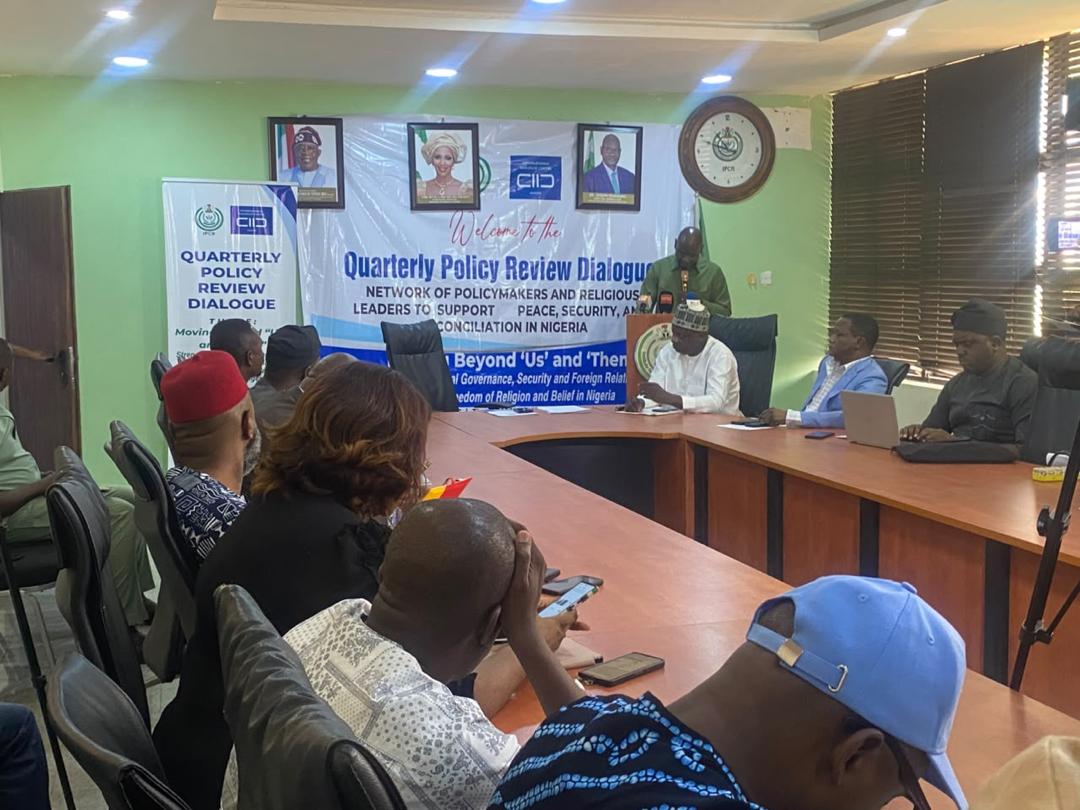
The dialogue, organised by the Network of Policymakers and Religious Leaders to Support Peace, Security and Reconciliation in Nigeria (NPMRL), was held on Friday under the theme, “Moving Beyond ‘Us versus Them’: Strengthening Local Governance, Security and Foreign Relations to Protect Freedom of Religion or Belief in Nigeria.”
Zuru traced the consequences of identity-based hatred to historical atrocities, including Nazi racial supremacy, the 1994 Rwandan genocide and the 1992 Bosnian conflict, arguing that intolerance undermined social cohesion and the moral foundations of society.
He said Nigeria’s worsening situation was linked to poor policy choices, persistent poverty, declining confidence in the justice system and the inability of political leadership to build consensus around national priorities.
According to him, weakened leadership among religious institutions, traditional rulers, community figures and other influential non-state actors has further contributed to the country’s governance and security challenges.
“The compromised and receding local leadership by both state and non-state actors … as well as moribund formal institutions of public policy and public authority and accountability are only responsible for the current state of hopelessness in our dear country today,” he said.
Zuru identified local government autonomy as a critical requirement for effective governance, particularly at the grassroots, urging the Federal Government to address the issue decisively.
He argued that stronger local government institutions would improve public policy delivery and enable communities to respond more effectively to their development and security needs.
He also challenged religious and community leaders to take greater responsibility for addressing intolerance, rebuilding trust and influencing young people positively.
With killings and displacement continuing in different parts of the country, he said community leaders must be prepared to speak truthfully to political authorities and help shape policies that respond to the country’s security and development challenges.
On national security, Zuru argued that terrorism, banditry and other forms of organised criminality had transnational dimensions, involving cross-border networks of recruitment, financing and other forms of support.
He said Nigeria could not effectively confront such threats in isolation and called for stronger bilateral and multilateral partnerships, particularly in intelligence gathering, military capacity and counter-insurgency operations.
“Therefore, clandestine and proactive diplomacy is mandatory for the success of every counter initiative meant to subdue these threats,” he said.
He added that Nigeria needed genuine international partners willing to support its efforts against insecurity.
Zuru maintained that foreign relations should be treated as an important component of national security policy, given the cross-border character of extremist and criminal networks.
Earlier, the Director-General of IPCR, Dr Joseph Ochogwu, warned that divisive narratives presenting complex security challenges exclusively through religious identities could deepen mistrust and undermine national cohesion.

Ochogwu, said legitimate concerns about violations of freedom of religion or belief must be addressed without allowing public discourse to reinforce religious divisions.
He called for impartial security responses, inclusive governance, accountability for human rights violations and constructive engagement among religious leaders, policymakers and community institutions.
He said protecting religious freedom required more than constitutional guarantees, stressing the importance of effective institutions, consistent application of the law and mechanisms for preventing conflicts before they escalated.
Ochogwu also identified local governance, security governance and foreign relations as critical areas requiring stronger policy attention, urging stakeholders to translate dialogue into practical recommendations and measurable interventions.
He noted that Nigeria’s Constitution guaranteed freedom of thought, conscience and religion, prohibited the adoption of a state religion and protected citizens against discrimination on religious grounds.
The dialogue also featured Reverend John Joseph Hayab as discussant and brought together policymakers, religious leaders and other stakeholders to examine ways of strengthening religious freedom, security and peaceful coexistence.
The IPCR said the engagement was part of efforts to strengthen collaboration between religious leadership and public institutions in addressing conflict and promoting national reconciliation.
(vitalnewsngr.com)