
Nigeria–China Relations @55: A Result-Driven Partnership Anchored On Pragmatism
By Lawal Sale
February 2026 marks a symbolic and historic convergence in Nigeria–China relations.
It is the Year of the Horse in the Chinese lunar calendar and also the year Nigeria and China commemorate 55 years of enduring diplomatic relations.
Interestingly, horses feature prominently on Nigeria’s coat of arms, a coincidence that subtly reflects strength, resilience and forward momentum—qualities that have consistently defined relations between both countries over the past five and a half decades.
This year therefore represents a dual celebration : the dawn of a new lunar year in China and a significant diplomatic milestone between two influential nations of the Global South.
Nigeria is Africa’s most populous nation, while China is the second most populous country globally.
In another striking coincidence, both nations celebrate their National Day on October 1, a symbolic alignment that underscores a longstanding diplomatic affinity.
Nigeria and China formally established diplomatic relations on February 10, 1971, following the signing of a joint communiqué.
Since then, relations between the two sovereign United Nations member states have remained stable, cordial and mutually beneficial.
Over time, cooperation has evolved from basic diplomatic engagement into a robust, multi-layered partnership anchored on mutual respect, non-interference and shared development aspirations.
In the past 55 years, Nigeria–China relations have transformed into a Comprehensive Strategic Partnership, elevating bilateral cooperation across diverse and strategic sectors.
Nigeria is a key participant in China’s institutionalised development frameworks, including the Belt and Road Initiative (BRI) and the Forum on China–Africa Cooperation (FOCAC).

These platforms promote collective consultation, inclusive development and practical South-South cooperation in an increasingly volatile and unpredictable global environment.
Global South affairs experts note that Nigeria and China have consistently treated each other as equal and reliable partners, yielding tangible and measurable outcomes across infrastructure development, financing, education, healthcare, agriculture, telecommunications, science and technology, climate action, cultural exchange and people-to-people cooperation.
Under the BRI and FOCAC frameworks, Nigeria has benefited from several landmark, people-centred infrastructure projects: these include the Abuja–Kaduna railway, Lagos–Ibadan railway, Lagos intra-city rail system, Abuja monorail project, Lekki Deep Sea Port, Abuja–Keffi–Makurdi expressway, and six modern airport terminals across Nigeria among other transformational development initiatives executed through Nigeria–China cooperation.
Evidently, Nigeria has emerged as China’s largest engineering contracting partner in Africa, its second-largest export destination, third-largest trading partner, and a major investment hub on the continent.
Experts observe that economic collaboration between Nigeria and China under the BRI and FOCAC mechanisms has been extensive, pragmatic and mutually rewarding.
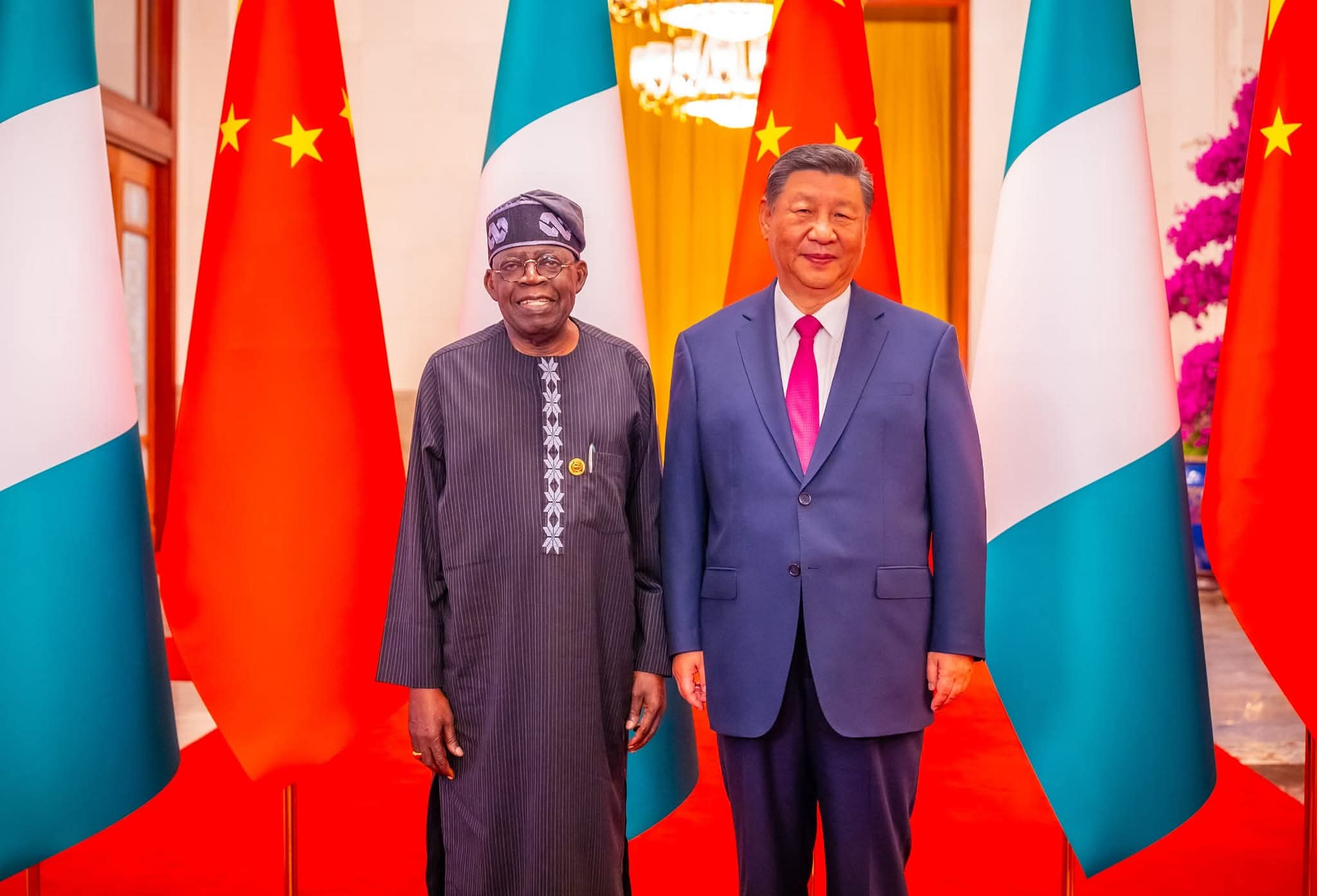
In September 2024, at the invitation of President Xi Jinping, Nigeria’s President Bola Ahmed Tinubu paid a state visit to China and participated in the 9th FOCAC Beijing Summit.
During bilateral talks, the two leaders jointly announced the upgrade of Nigeria–China relations from Strategic Partnership to a Comprehensive Strategic Partnership.
Both presidents reaffirmed their commitment to building a high-level China–Nigeria community with a shared future, presenting an exemplary model of modern South-South cooperation aligned with President Xi’s Global Governance Initiative.
In January 2025, during China’s traditional “Africa-first” diplomatic engagement, Chinese Foreign Minister Wang Yi, also a member of the Political Bureau of the Communist Party of China, paid an official visit to Nigeria.
The visit reinforced the strategic understandings reached at the FOCAC Summit and deepened bilateral coordination. Minister Wang Yi and Nigeria’s Foreign Minister, Yusuf Tuggar, exchanged views on major diplomatic, economic and developmental milestones achieved under the leadership of Presidents Xi and Tinubu.
It is also pertinent to note that Nigeria was among the countries that actively supported the restoration of China’s legitimate seat at the United Nations in 1971.
In the joint communiqué establishing diplomatic relations, Nigeria formally recognised the Government of the People’s Republic of China as the sole legitimate representative of the entire Chinese people, including the Taiwan region.
Since then, successive Nigerian governments have consistently and firmly adhered to the One-China principle, which remains the cornerstone of stable, practical and forward-looking Nigeria–China relations.
As of November 2025, bilateral trade between the two most populous countries in Africa and the world stood at over $22.3 billion, reflecting a remarkable growth trajectory.
With China as a global economic powerhouse and Nigeria as a leading African economy, both countries continue to serve as strategic pillars of growth, cooperation and development within Africa, the Global South and the international system.
As the two countries mark 55 years of diplomatic engagement, their relationship stands as a compelling testament to pragmatic cooperation, mutual respect and results-driven partnership in an era of global uncertainties.
“Lawal Sale is an Abuja based Global South Affairs Analyst *
(vitalnewsngr.com)