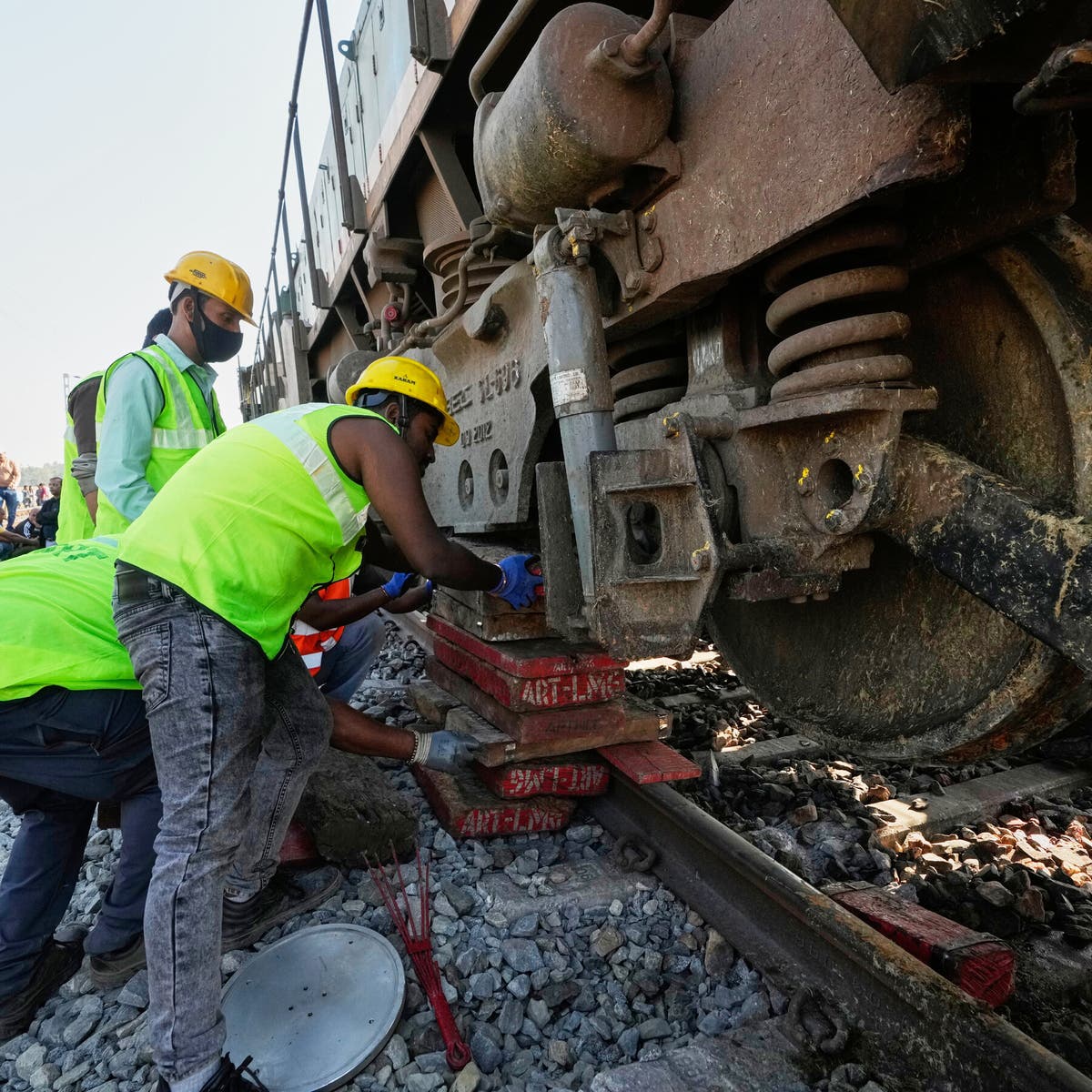

A passenger train in India hit a herd of elephants, killing seven of them, injuring one and partly derailing the train, according to railway and forest authorities.
The accident happened early Saturday in a forested part of Assam, a state in northeastern India known for its wildlife and its tea plantations.
No humans were injured in the episode.
The train’s driver saw the herd, which consisted of around 100 elephants, ahead of him on the tracks and hit the emergency brakes, said Kapinjal Kishore Sharma, an official of the Northeast Frontier Railways.

This slowed the train but could not stop it in time to avoid hitting three adult and four young elephants.
The impact derailed the train’s engine and five of its cars, which held about 200 of the train’s 650 passengers.
They were moved into the remaining cars and eventually the train continued on its way, first to Guwahati in Assam and then to New Delhi.
“Because of the driver’s timely action in controlling the speed of the train, passengers escaped unhurt,” Mr. Sharma said.
Trains passing through the area were diverted to another line for several hours.
In many parts of India, elephants regularly traverse railway tracks, highways and areas with human settlements in search of food.
Certain areas have been designated “elephant corridors,” where drivers are warned to exercise caution, reduce speed, avoid loud noises and sudden lights and prioritize elephants’ right of way.
India has 150 designated elephant corridors, 42 of them in the northeastern part of the country.
The place where Saturday’s accident took place was not such a corridor, the railway said in a statement.
Lately, more elephants have been crossing the tracks even in areas not declared as corridors, said Kushal Konwar Sarma, a veterinarian who has worked in elephant conservation for the last 40 years.
Increased human encroachment and the resulting loss of habitat has left them “scattered everywhere,” he said. “They cross the tracks anywhere they can find food.”
The central and state governments have employed technology in some regions to avert such accidents using surveillance systems, including some that sense vibrations, to monitor elephant movements and alert railway workers.
But this has been of little avail, according to Mr. Sarma.
“We have seen these systems seldom work in practice, on the ground,” he said.
Dozens of elephants have died from being struck by trains in recent years, according to government data.
It is the second most common cause of accidental elephant death, after electrocution.
Source – New York Times
(vitalnewsngr.com)